


The insightful articles, inspiring narrations and analytical perspectives presented by the Editorial Team, establish an alluring connect with the reader. My compliments and best wishes to SP Guide Publications.
"Over the past 60 years, the growth of SP Guide Publications has mirrored the rising stature of Indian Navy. Its well-researched and informative magazines on Defence and Aerospace sector have served to shape an educated opinion of our military personnel, policy makers and the public alike. I wish SP's Publication team continued success, fair winds and following seas in all future endeavour!"

Since, its inception in 1964, SP Guide Publications has consistently demonstrated commitment to high-quality journalism in the aerospace and defence sectors, earning a well-deserved reputation as Asia's largest media house in this domain. I wish SP Guide Publications continued success in its pursuit of excellence.
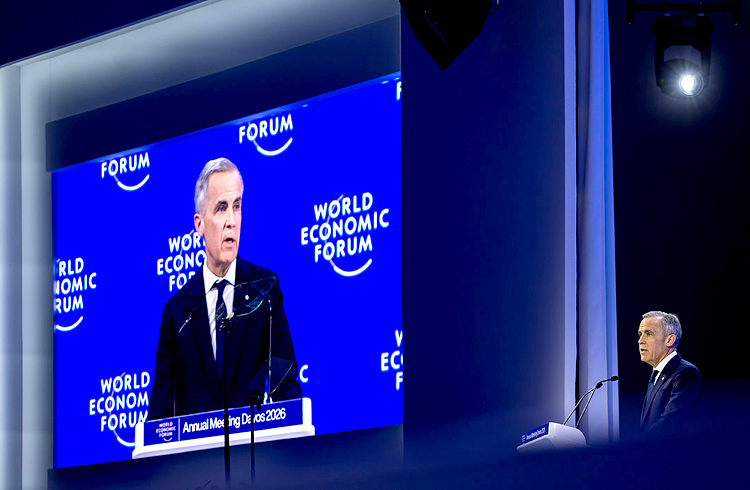
At Davos, a global stage that has become the barometer of global geopolitical and geo-economic currents and cross-currents, Mark Carney spoke unflinchingly about a rupture in the world order, the end of a pleasant fiction and the beginning of a harsh reality
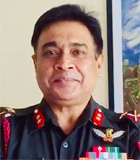 |
The Author is former Chief of Staff of a frontline Corps in the North East and a former helicopter pilot. He earlier headed the China & neighbourhood desk at the Defence Intelligence Agency. He retired in July 2020 and held the appointment of Addl DG Information Systems at Army HQ. |
At least he said it! At last he said it! Canadian Prime Minister Mark Carney is the typical poster boy of the 'Deep State' ecosystem, the insider who has been the head of the Bank of England and the Bank of Canada and thus a key member of the inner circle who sit around the table in Basel, Switzerland headquartered Bank for International Settlements (BIS) that serves as a 'bank for central banks' and confabulate about secretive international monetary and financial operations. In his latest incarnation as the Canadian Prime Minister whom the US President Donald Trump derisively refers to as the 'Governor of America's 51st State', an epithet that Trump first used to describe his predecessor Justin Trudeau, Carney has decided that 'enough is enough.'
At Davos, a global stage that has become the barometer of global geopolitical and geo-economic currents and cross-currents, Mark Carney perhaps became "the leader of the free world" after delivering a historic speech, "If you are not at the table, you are on the menu". He called on small and medium powers to unite around shared values. That was Carney's reincarnation.
Mark Carney perhaps became "the leader of the free world" after delivering a historic speech, "If you are not at the table, you are on the menu"
Carney spoke unflinchingly about a rupture in the world order, the end of a pleasant fiction and the beginning of a harsh reality. He emphasised the end of the 'rules-based international order' which he mildly termed as somewhat of a fiction and outlined how countries like his must adapt by building strategic autonomy while maintaining values like human rights and sovereignty. Carney also called upon intermediate powers to unite and build a new order.
Amid a convergence of pressures rarely experienced simultaneously: geopolitical fragmentation, rapid technological acceleration, and escalating climate and environmental risk, Carney chose to speak out. He was echoing what leaders across the globe are silently experiencing, many choosing to bide their time and stay silent or simply capitulate to Trump's theatrics. Few have crossed swords publicly, Brazil's Lula da Silva and French President Emanuel Macron among the few.
In matter of two weeks since Carney's Davos address on January 20, 2026, there has been tectonic shifts in the geopolitical landscape. Perhaps inspired by Carney's daring, the EU is finding its voice. Even as the European Council President Costa and European Commission President von der Leyen witnessed the grand Republic Day military parade and the cultural performances in New Delhi as the Chief Guests on January 26, 2026, NATO Secretary General Mark Rutte remarked in the European parliament, "If anyone thinks here...that the European Union or Europe as a whole can defend itself without the US, keep on dreaming. You can't."
On January 27, 2026, the EU signed a trade deal with India in New Delhi, defying Trump's targeting of India with 50 per cent punitive tariffs, the MAGA loyalists targeting the Indian high-tech H1-B visa workers, even as the Indo-US trade talks were going nowhere
Within hours, the French Foreign Minister Jean-Noël Barrot snapped back, "No, Dear Mark Rutte. Europeans can and must take charge of their own security." Back in May 9, 2025, France and Poland had signed "The Nancy Treaty" committing both sides to mutual assistance in the case of an attack by an aggressor with President Macron, who leads the EU's only nuclear weapons power, also implying that France's 290-warheads-strong independent nuclear arsenal could be part of such assistance. So some security architecture sans the US, but parallel to the US led NATO was already under works. President Trump's threats to impose sanctions on any NATO member opposing his plans to snatch Greenland from Denmark and his threats to Canada upped the ante. The Europeans realised that they were one "Truth Social" post away from becoming defenceless.
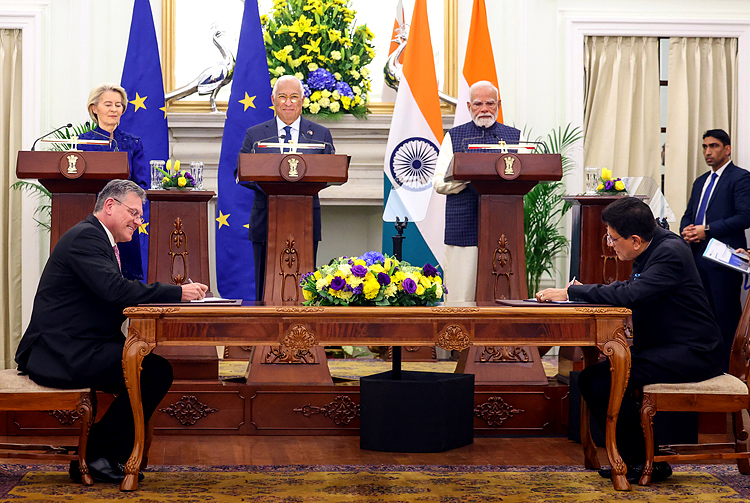
The next day on January 27, 2026, the EU signed a trade deal with India in New Delhi, defying Trump's targeting of India with 50 per cent punitive tariffs, the MAGA loyalists targeting the Indian high-tech H1-B visa workers even as the Indo-US trade talks were going nowhere. Prime Minister Modi described it as "Mother of all Deals." Prime Minister Carney's daring needs to be contextualised in this backdrop. The US-Canada trade is $800 billion annually while the "Mother of All Trade Deals", the EU-India trade is $132 billion at present. Thus Carney has taken a big gamble and he is headed to India in March to build alternative supply chains including Uranium supplies to fuel India's nuclear energy plans. There are multi-track developments to forge new trading channels and monetary settlement systems beyond the hegemony of petrodollar and the SWIFT settlement system.
Europe has set aside a war chest of $150 billion for defence, mandating 60 per cent of all equipment purchased must be 100 per cent European made
Europe has meanwhile set aside a war chest of $150 billion for defence, mandating 60 per cent of all equipment purchased must be 100 per cent European made. This runs counter to President Trump's January 20, 2026 'Truth Social' post demanding that the five per cent defence spending, earlier set to be achieved by NATO members by 2035 be advanced to the current year with a 100 per cent BUY AMERICAN defence hardware diktat. A shadow NATO command structure bypassing the Supreme Allied Commander Europe, always an American Four-star General, is taking shape. European capitals are contemplating to charge the US for operating its massive military bases housing 80,000 troops, which hitherto enjoy free land, water and electricity, in the same reciprocal way as Trump threatens tariffs on European goods. It is not inconceivable to imagine that these bases may face eviction notices if they fail to pay up the rents and allied charges. After 80 years of close symbiotic relationship, a trans-Atlantic divorce has become a plausible outcome, sooner than later.
How is India placed in the churn that is reshaping the world order? Why has the Indian leadership remained silent in the gathering storm? Why has Prime Minister Modi avoided travel to global summits like the Gaza Peace Summit in Egypt and the ASEAN-India Summit in Kuala Lumpur or to address the UN General Assembly? Well, the key point that must be appreciated is that India is not in the central sphere of the global power equations, not consequential yet; not militarily, not as a manufacturing powerhouse, not in terms of agricultural output, not dominating any particular natural resource segment, not as an R&D or innovation or technology or education hub.
India, the 4th largest global economy, ranks a lowly 143rd in terms of per capita GDP, lower than countries like Angola, Honduras, Venezuela etc.
We must never forget that the 4th largest global economy ranks a lowly 143rd in terms of per capita GDP, lower than countries like Angola, Honduras, Venezuela etc. The $4.19 trillion economy ranks 105th out of 127 countries in the Global Hunger Index. With 35.5 per cent of children stunted and 18.7 per cent wasting away, an estimated 200 million Indians remain malnourished—equivalent to Brazil's entire population. Youth unemployment is at a staggering 16 per cent. So India needs greater focus on employment generation over GDP headlines, massive healthcare and education investment instead of vanity projects, progressive taxation to address extreme inequality, agricultural revival for the largest workforce segment and manufacturing focus for quality job creation. The best way to navigate the current global churn is to avoid collision and focus on strategies that helps our economy and our teeming millions. A strive for strategic autonomy doesn't necessarily involve active friction with the US which is home to millions from the diaspora.
The fact remains that India has always strived for a degree of strategic autonomy since independence, even though we were left famished, hungry, illiterate and divided when the colonial rulers left. First it was our choice to form a non-aligned movement to steer clear of the capitalist versus communist economy models of cold-war period that lasted till 1989. Now it is in the garb of Atmanirbhar Bharat. That's work in progress. Alternate energy sources, trading routes and payment systems like BRICS Pay and Vostro rupee accounts in international banking systems are being systematically put in place by India even as it continues to engage the US in trade talks. In the past year alone, over $50 billion in US treasuries have been relinquished by India in favour of gold to reduce volatility. That's a quarter of the foreign exchange reserves held in US dollars. Meanwhile, India's quest for power grab must wait.
This is Canadian Prime Minister Carney's moment under the sun. We must not forget to applaud, even if it is from the side-lines!