






The insightful articles, inspiring narrations and analytical perspectives presented by the Editorial Team, establish an alluring connect with the reader. My compliments and best wishes to SP Guide Publications.

"Over the past 60 years, the growth of SP Guide Publications has mirrored the rising stature of Indian Navy. Its well-researched and informative magazines on Defence and Aerospace sector have served to shape an educated opinion of our military personnel, policy makers and the public alike. I wish SP's Publication team continued success, fair winds and following seas in all future endeavour!"

Since, its inception in 1964, SP Guide Publications has consistently demonstrated commitment to high-quality journalism in the aerospace and defence sectors, earning a well-deserved reputation as Asia's largest media house in this domain. I wish SP Guide Publications continued success in its pursuit of excellence.
China's unveiling of a motion-controlled combat robot, capable of mirroring soldiers' movements in real time, highlights advances in human-robot combat collaboration, remote battlefield operations, and military training, while also raising significant ethical and strategic concerns globally
 |
The Author is Former Director General of Information Systems and A Special Forces Veteran, Indian Army |
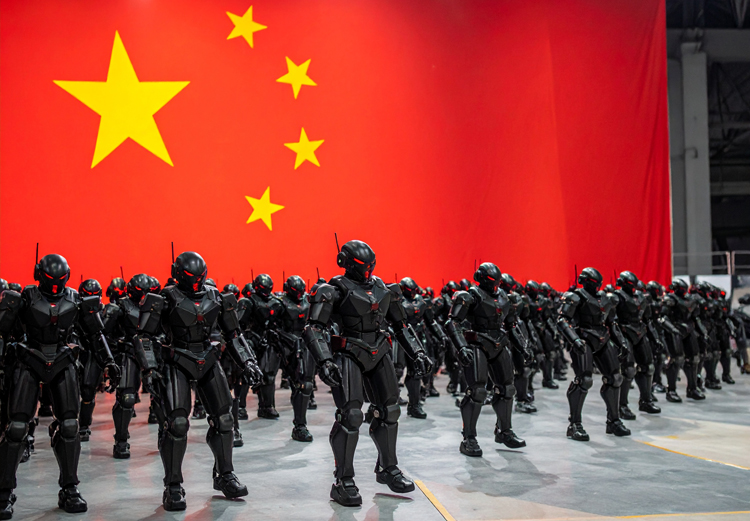
In a significant step towards integrating advanced robotics into modern warfare, China has unveiled a motion-controlled combat robot capable of mimicking soldiers' movements in real-time. The robot, showcased to defence representatives from 13 foreign militaries, has the potential to change the landscape of military technology. It marks another milestone in China's effort to develop autonomous systems for warfare, an initiative that includes AI-powered robots with advanced capabilities. The robot uses a "shadow-boxing" style, allowing a remote human operator to control its movements, including complex, instantaneous, close-combat manoeuvres.
The robot uses a "shadow-boxing" style, allowing a remote human operator to control its movements, including complex, instantaneous, close-combat maneuvers
During the week-long event, cadets from China and other countries participated in various military training activities, including testing new robotic technologies. The motion-controlled combat robot stood out as a prime example of China's growing interest in military robotics, a field that continues to gain prominence across the globe. In addition to combat robots, the IACW also featured demonstrations of other robotic systems, including those designed for bomb disposal and clearance of mines. The mine-clearing robot, which uses AI visual recognition alongside metal detectors, was one of the highlights, showcasing how artificial intelligence can improve military operations and safety on the battlefield. During the IACW, instructors emphasised the importance of technology in creating a more effective and deterrent military force. Xia Yunfeng, an instructor at the event, highlighted that such technologies not only strengthen military capabilities but also contribute to peacekeeping efforts by enhancing strategic defence. However, the broader debate about the ethical use of AI in warfare continues to evolve as new developments like these robots reshape the future of global security.
The unveiling of the motion-controlled combat robot also highlighted China's ongoing integration of AI in military training. According to the China Military report, AI-powered systems were demonstrated that could create virtual battlefields and generate personalised training plans for cadets based on their performance. These technologies aim to provide more effective training, helping soldiers develop their skills in a controlled, simulated environment before facing real-world challenges. At the heart of this innovation is the robot's ability to replicate human movements in real-time. According to a report by Science and Technology Daily, the robot uses artificial intelligence to match the combat actions of a human operator wearing a motion-sensing suit. Whether it's a punch or a defensive move, the robot mirrors each motion with remarkable precision. The use of AI in military training raises significant questions about the future of warfare. As robots become more sophisticated, the roles they play in both combat and training could change dramatically. With autonomous systems like the new motion-controlled robot, military operations may become more flexible, adaptable, and, perhaps, less reliant on human presence in hazardous situations.
At the heart of this innovation is the robot's ability to replicate human movements in real-time
This technology could potentially allow soldiers to operate the robots from a distance, controlling them in high-risk environments without directly engaging in combat. It represents a fusion of human skill with robotic precision, offering new possibilities for modern military strategies, particularly in dangerous or complex combat situations. The motion-controlled robot is part of China's larger strategy to develop autonomous combat systems for modern warfare. Previously, China has demonstrated other robotic technologies, including gun-toting robotic dogs and mine-clearing robots. These innovations are not just for show, they represent China's ambition to create autonomous units capable of performing tasks that are either too risky or impossible for humans.
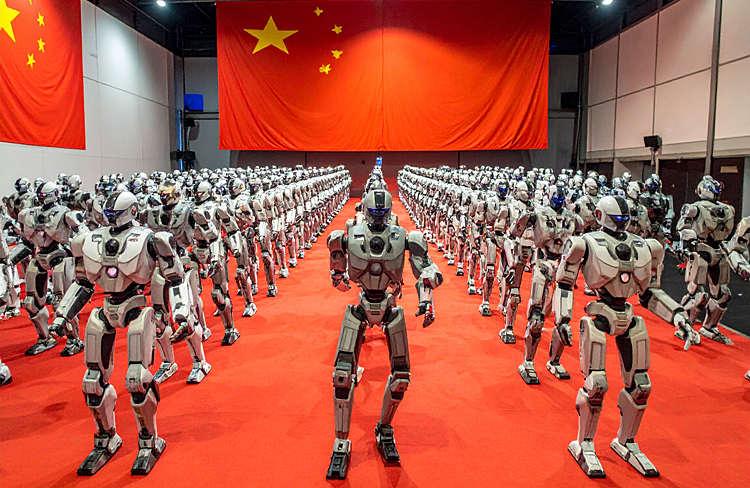
As the world celebrated the Year of the Fire Horse in February 2026, China stole the spotlight at the annual CCTV Spring Festival Gala, not with celebrities, but with dozens of humanoid robots performing martial arts, swordplay, and nunchuk routines in perfect synchronisation. The performance blended traditional culture with cutting-edge robotics, signalling China's heavy investment in AI and automation.
This technology could potentially allow soldiers to operate the robots from a distance, controlling them in high-risk environments without directly engaging in combat
As of now there are no official confirmations of China's new robot, showcased at the 12th IACW, deployed inactive, live-fire combat against another country. The robot utilises a sensor suit to replicate human actions like striking and weapons handling. While reports of a 'Robot Soldier' on China's border along India exist, other viral videos showing armed robots have been identified as AI-generated or non-combat, with official deployment in live combat still unverified. While this represents a significant leap in AI-enabled "intelligent warfare" and, specifically, human-robot collaborative combat, the technology is primarily in the advanced, demonstration and testing phase. At the same time, China has a serious problem of declining birth rate and would want to deploy robot soldiers in combat.
The motion-controlled robot is part of China's larger strategy to develop autonomous combat systems for modern warfare
Also, as China moves forward with its robotic advancements, the ethical implications of using AI and robots in warfare remain a critical point of discussion. The introduction of robots capable of real-time combat raises questions about the future role of human soldiers and the potential risks of autonomous decision-making in military contexts. While robots may offer increased precision and safety, their use in combat scenarios could also spark concerns about accountability and the unintended consequences of fully autonomous warfare systems.