






The insightful articles, inspiring narrations and analytical perspectives presented by the Editorial Team, establish an alluring connect with the reader. My compliments and best wishes to SP Guide Publications.

"Over the past 60 years, the growth of SP Guide Publications has mirrored the rising stature of Indian Navy. Its well-researched and informative magazines on Defence and Aerospace sector have served to shape an educated opinion of our military personnel, policy makers and the public alike. I wish SP's Publication team continued success, fair winds and following seas in all future endeavour!"

Since, its inception in 1964, SP Guide Publications has consistently demonstrated commitment to high-quality journalism in the aerospace and defence sectors, earning a well-deserved reputation as Asia's largest media house in this domain. I wish SP Guide Publications continued success in its pursuit of excellence.
With the ongoing US-NATO war on Russia, using Ukraine as their proxy, development of doomsday weaponry has accelerated worldwide
 |
The Author is Former Director General of Information Systems and A Special Forces Veteran, Indian Army |
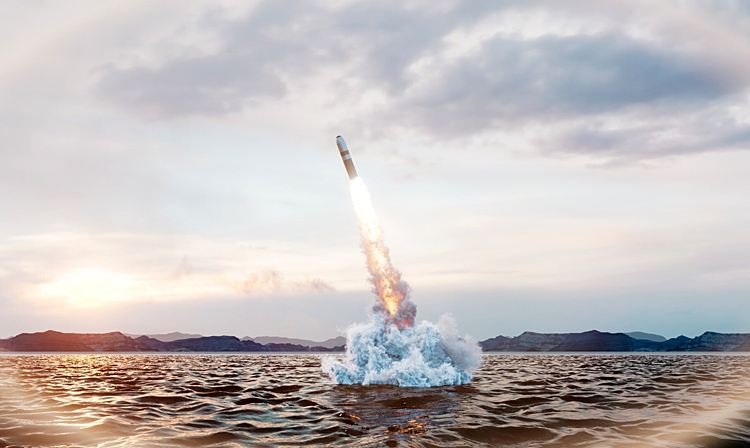
Addressing the National Defence College course at New Delhi in 2000, a foreign ambassador to India said his country possessed enough nukes to destroy the planet 60 times. With the ongoing US-NATO war on Russia, using Ukraine as their proxy, development of doomsday weaponry has accelerated worldwide. According to traditional Hindu texts, Kalyug, which started around 3102 BCE has a cycle of 4,32,000 years; its end predicted around 4,28,899 CE, when 'Kalki' will appear. But some modern interpretations, such as 'Bhavishya Malika', predict Kalyug ending around 2025-2032. The latter could well be true, which is why Donald Trump is heading the Rouge-Based Order of the West; West being the acronym for 'War mongering Establishment'.
Doomsday weaponry generally refer to large-scale nuclear arsenals and automated retaliation systems designed for global destruction
Doomsday weaponry generally refer to large-scale nuclear arsenals and automated retaliation systems designed for global destruction. However, the preponderance of precision weapons coupled with the ability to employ them in swarms can also spell doom in regions, albeit not the planet. In current political and media discussions, the term "doomsday weapons" is often used to describe cutting-edge military technology or significant defence systems.
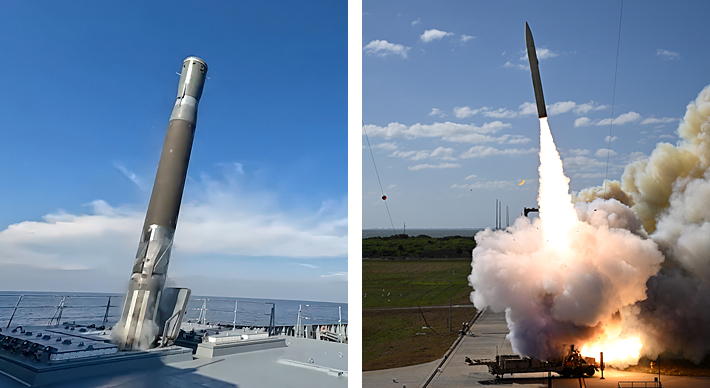
The US currently deploys 1,770 warheads, mostly under Strategic Command, to its nuclear triad: Ohio-class submarines with Trident II submarine-launched ballistic missiles, silo-based Minuteman III intercontinental ballistic missiles, and B-2 Spirit and B-52 Stratofortress bombers armed with B61 and B83 bombs. The US Army's long-range hypersonic missile, 'Dark Eagle', is set to become a game-changer for rapid military strikes. Capable of reaching targets 3,480-km away in under 20 minutes, this missile can reportedly hit distant targets like mainland China from Guam, Moscow from Western Europe, or Tehran from the Gulf region.
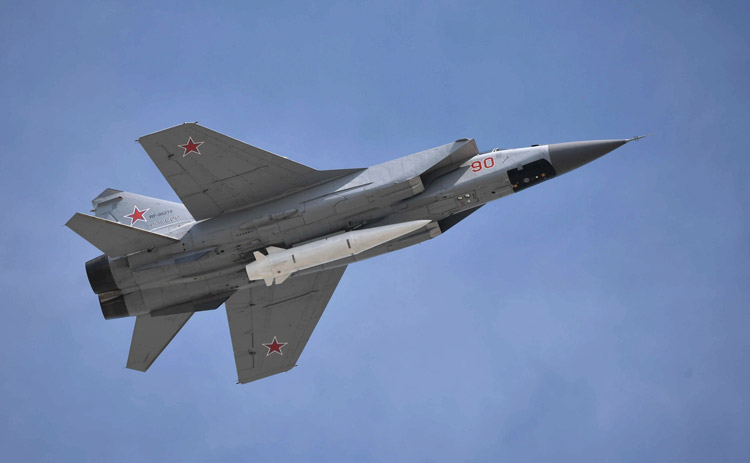
Russian super weapons until recently included: the Avangard hypersonic glide vehicle; the 9M730 'Burevestnik' nuclear-powered cruise missile; the 3M22 Zircon scramjet-powered anti-ship hypersonic cruise missile; the Kh-47M2 Kinzhal hypersonic air-launched ballistic missile. Then in 2025, Russia successfully tested 'Poseidon', a nuclear-powered underwater drone designed to trigger radioactive tsunamis along enemy coasts; capable of reaching intercontinental distances and loaded with a warhead reportedly 100 times more powerful than the nuke that the US used on Hiroshima. This unmanned vehicle now represents one of the most unconventional weapons ever conceived. In October 2025, President Vladimir Putin announced that the test marked the first time Poseidon had been launched from a submarine and operated on its own nuclear propulsion unit. The announcement was made just days after a separate test of another "super weapon," the 'Burevestnik' cruise missile.
The 20-metre-long Poseidon travels at speeds estimated up to 185 km/h, and can dive to depths of 1,000 meters. Russian media describe the warhead as having a two-megaton yield. Putin described Poseidon saying, "There is nothing like it, and there won't be anytime soon. There are no interception methods." Poseidon has reshaped the global conversation on nuclear weapons through its design and the threats it implies. According to multiple sources, including Reuters, Russia envisions Poseidon wiping out major port cities by flooding them with radioactive water.
The US Army's long-range hypersonic missile, 'Dark Eagle', is set to become a game-changer for rapid military strikes
China's "doomsday" capabilities center on a rapidly expanding nuclear triad (land, sea, air) with advanced ICBMs like the DF-41, capable of hitting the US mainland, alongside developing hypersonic weapons and potentially novel systems like laser weapons, enabling a robust second-strike deterrent against conventional threats, particularly from the US. China's growing space capabilities, including advanced counterspace weapons like directed energy, radio frequency and kinetic systems, pose a significant challenge to US space dominance and national security, though China emphasises deterrence through asymmetric means rather than direct parity. China's Hydrogen Bomb can target any part of the world in 20 minutes. At the same time, China's submarine trap threatens America's Pacific dominance. China emerging technologies are exploring advanced laser weapons (like the LY-1) and AI-enhanced systems.
Nuclear capabilities within Europe are held independently by the UK and France, and the NATO alliance shares a nuclear deterrence policy with the US. The UK's nuclear capability is based entirely on its fleet of four Vanguard-class ballistic missile submarines, each equipped with Trident II missiles. Its nuclear arsenal has fewer than 160 operational warheads out of a total stockpile of around 225 as of 2010. France maintains a dual system of submarine-launched ballistic missiles (SLBMs) and medium-range air-to-surface missiles deliverable by Rafale fighter-bombers. France has approximately 300 nuclear warheads in its arsenal. In addition, European nations that are part of NATO (Belgium, Germany, Italy, the Netherlands, and Turkey) host American nuclear weapons on their territory; US-owned B61 gravity bombs, which would be delivered by the host nations' own fighter jets in a conflict under strict authority of the US and NATO.
Poseidon has reshaped the global conversation on nuclear weapons through its design and the threats it implies
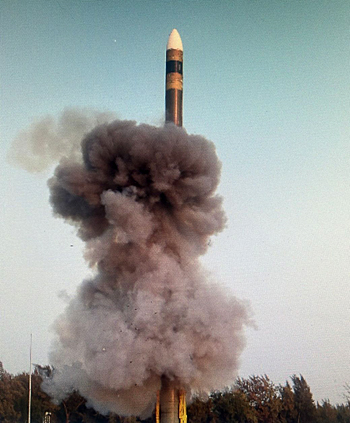
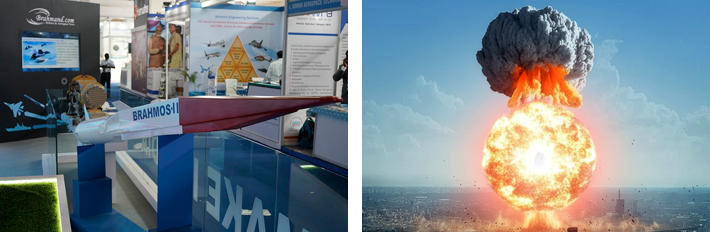
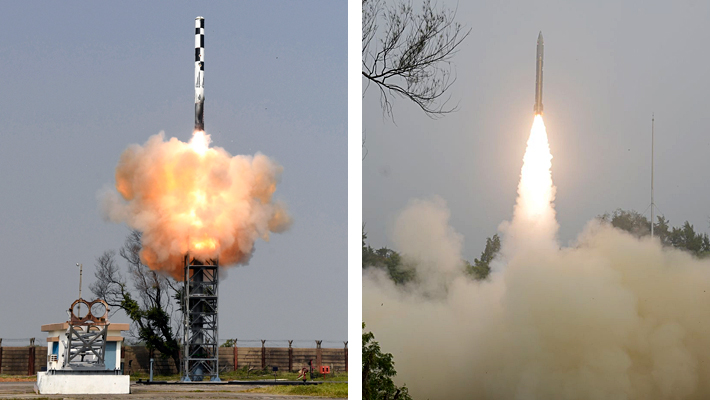
India's super weapons include advanced missile systems like the BrahMos supersonic cruise missile, the long-range Agni series ballistic missiles (including future MIRV-capable Agni-VI), indigenous naval assets such as the Vikramaditya carrier, and defence technologies like the Ballistic Missile Defence (BMD) system using PAD/AAD interceptors, nuclear triad, and advanced defence technology across air, sea, and land. India has successfully conducted salvo launch of two 'Pralay' missiles, the 4th Arihant Class Submarine is undergoing sea trials, and India and Russia are working on the BrahMos-II cruise missile, capable of being launched from land sea and air, with variants expected to reach 450-km and eventually up to 900-km.
There has been talk of aliens watching the planet and possibilities of asteroid strikes. But with Ukraine peace deal dumped, violence continuing in West Bank with US-Israel refusing to recognize Palestine, next US-Israel war with Iran in the offing, US eyeing Greenland after Venezuela, and Taiwan entering a phase of China-US conflict. We appear to be on the cusp of major conflict(s). The book 'The Dangerous Case of Donald Trump' published in 2017, in which 27 psychiatrists and mental health experts assessed Donald Trump as danger to the world, is coming true. Doomsday weaponry will increasingly come into play.