




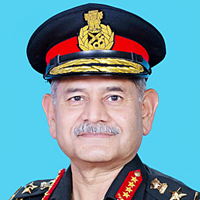
The insightful articles, inspiring narrations and analytical perspectives presented by the Editorial Team, establish an alluring connect with the reader. My compliments and best wishes to SP Guide Publications.
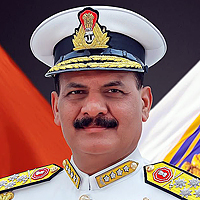
"Over the past 60 years, the growth of SP Guide Publications has mirrored the rising stature of Indian Navy. Its well-researched and informative magazines on Defence and Aerospace sector have served to shape an educated opinion of our military personnel, policy makers and the public alike. I wish SP's Publication team continued success, fair winds and following seas in all future endeavour!"

Since, its inception in 1964, SP Guide Publications has consistently demonstrated commitment to high-quality journalism in the aerospace and defence sectors, earning a well-deserved reputation as Asia's largest media house in this domain. I wish SP Guide Publications continued success in its pursuit of excellence.
India and China's first Corps Commander-level meeting in Arunachal Pradesh established a senior military channel to address Eastern Sector tensions. However, China's troop reductions reflect infrastructure-driven rapid mobilisation capabilities, underscoring India's need for continued vigilance and military modernisation.
 |
The Author is Former Director General of Information Systems and A Special Forces Veteran, Indian Army |

The first-ever India-China Corps Commander-level military meeting in Arunachal Pradesh was held over two consecutive days on September 6 and 7, 2026. The talks took place across the Line of Actual Control (LAC), commencing at the Wacha Border Personnel Meeting (BPM) point in the Kibithu sector (Anjaw district) on the Indian side on September 6, and continuing at Damai on the Chinese side on September 7.
By elevating these to Corps Commander-level flag meetings, both nations have officially structured a senior, institutional military channel specifically for the Eastern Sector
The Indian delegation was led by Lieutenant General Girish Kalia, Commander of the Dimapur-based 3 Corps (Spear Corps), meeting directly with his Chinese People's Liberation Army (PLA) counterparts. For some strange reasons, neither the Ministry of External Affairs (MEA)/Indian authorities nor the Chinese government released the specific individual name or rank of the Chinese military commander who headed their 12-member Chinese delegation, creating doubts that he may have been of lower rank/comparative status.
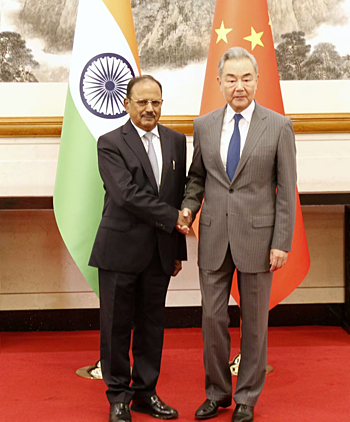
Unlike the previous 23 rounds of high-level military talks that focused strictly on the Western Sector (Eastern Ladakh), this meeting explicitly tackled the Eastern Sector (Arunachal Pradesh). Discussions focused mainly on resolving recent operational friction points and troop build-ups, specifically in the sensitive Taksing area of the Upper Subansiri District. Both commanders worked on operationalising the decisions made on August 25–26 during the Special Representatives (SR) talks in Beijing between National Security Adviser Ajit Doval and Chinese Foreign Minister Wang Yi. This included establishing local confidence-building measures (CBMs) and new lines of communication.
Under the new arrangements agreed upon during the SR-level talks held in Beijing on August 25, 2026, two additional meeting points were agreed for General Level Mechanism or Senior Highest Military Commander meetings. Two additional channels for border military hotlines in the Eastern and Middle Sectors were also established in order to enhance communication and coordination between the two militaries.
This provides local commanders on the ground immediate, secure channels to freeze a border face-off before it escalates into violence
While diplomatic press releases heavily lean on phrases like "maintaining peace and tranquillity", analysing the strategic context reveals ground-level structural shifts:
This scale-down is a calculated tactical adjustment rather than an absolute reduction in Chinese military threat; enabled by China's vastly superior mobilisation infrastructure, advanced weaponry, and logistics along the frontier
The future course of course depends on the sincerity of China, which ironically holds all the cards. China historically uses dialogue to freeze ground realities in its favour while altering the status quo on the Line of Actual Control (LAC) through salami slicing. Moreover, the 'Package Deal' which emerged during the SR-level talks for completely settling the border is a chimera for India since the territory of India illegally claimed by China is by far larger than Aksai Chin that India wants.
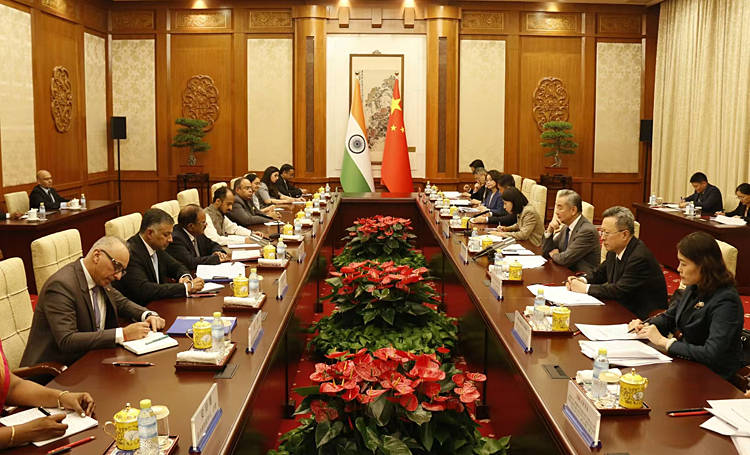
Concurrently, Defence Minister Rajnath Singh has been saying that China has reduced its deployment along the LAC. The Ministry of Defence (MoD) Annual Report 2025-26 also states the same. However, this scale-down is a calculated tactical adjustment rather than an absolute reduction in Chinese military threat; enabled by China's vastly superior mobilisation infrastructure, advanced weaponry, and logistics along the frontier. The MoD report notes that in 2025, China pulled back an estimated 10 Combined Arms Brigades (CABs) from the forward lines - withdrawing roughly 40,000 to 50,000 active troops. But the reports stresses that Beijing still maintains another 10 CAB-sized formations stationed strictly in "traditional training areas" and depth locations just behind the LAC.
China's troop reduction is neither permanent nor a peace gesture. It is a structural shift toward high-tech, rapid-induction warfare enabled by superior border infrastructure. India has no place for complacency
Factually, China's troop reduction is a direct result of their modernisation and infrastructure edge, allowing prioritising speed over permanent physical presence. Over the last six years, the PLA built a massive network of dual-use Xiaokang (border) villages, all-weather paved roads, expanded military airfields (like Hotan and Ngari Gunsa), and a network of heliports. They can now rapidly move divisions via high-speed rail and multi-lane expressways directly to the LAC within hours, no longer needing thousands of soldiers freezing in forward winter dugouts. Moreover, the PLA has heavily deployed unmanned logistics drones, automated supply depots, and climate-controlled habitats. They require fewer human presence.
Finally, China's troop reduction is neither permanent nor a peace gesture. It is a structural shift toward high-tech, rapid-induction warfare enabled by superior border infrastructure. India has no place for complacency.