






The insightful articles, inspiring narrations and analytical perspectives presented by the Editorial Team, establish an alluring connect with the reader. My compliments and best wishes to SP Guide Publications.
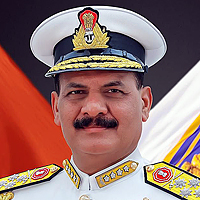
"Over the past 60 years, the growth of SP Guide Publications has mirrored the rising stature of Indian Navy. Its well-researched and informative magazines on Defence and Aerospace sector have served to shape an educated opinion of our military personnel, policy makers and the public alike. I wish SP's Publication team continued success, fair winds and following seas in all future endeavour!"

Since, its inception in 1964, SP Guide Publications has consistently demonstrated commitment to high-quality journalism in the aerospace and defence sectors, earning a well-deserved reputation as Asia's largest media house in this domain. I wish SP Guide Publications continued success in its pursuit of excellence.
The landmark India-EU Technology and Defence Partnership underscores shared democratic values, growing industrial collaboration, and the pact's significance in strengthening Indo-Pacific security and India's 'Make in India' ambitions
 |
The Author is Former Director General of Information Systems and A Special Forces Veteran, Indian Army |
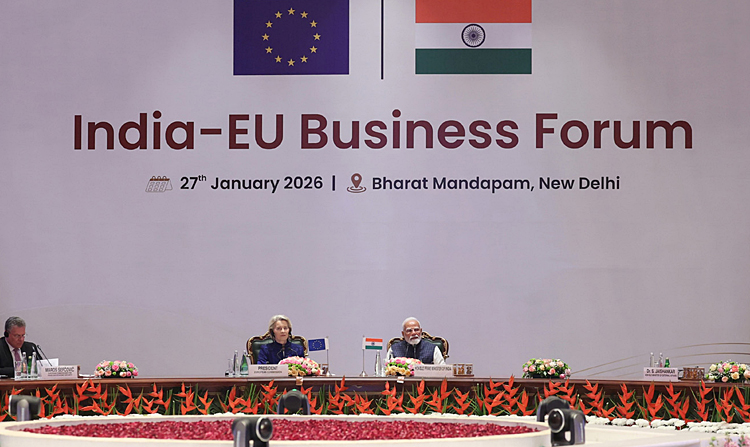
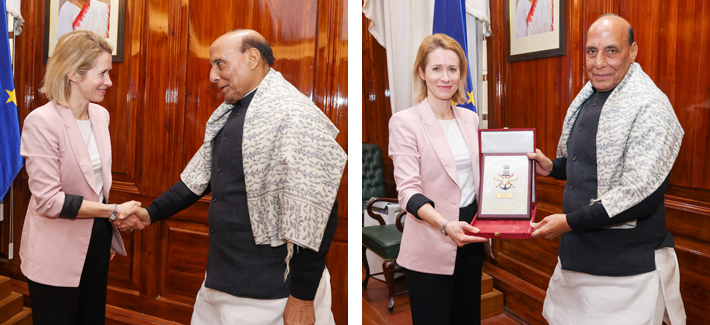
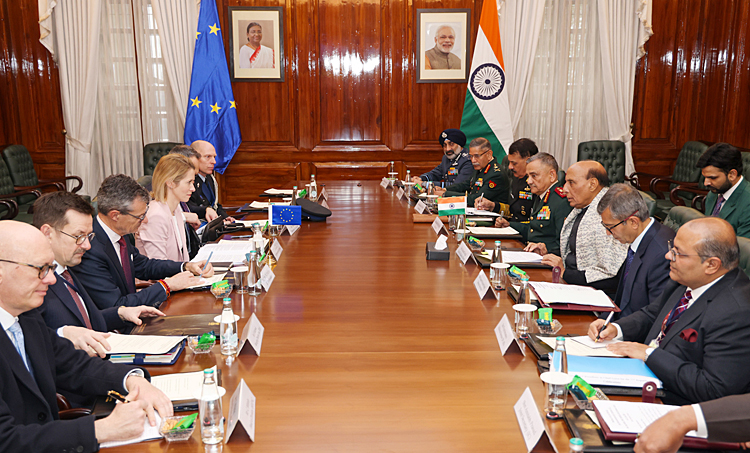
The India-EU Technology and Defence Partnership was signed in New Delhi on January 27, 2026, following delegation-level talks between EU High Representative for Foreign Affairs and Security Policy Kaja Kallas and Defence Minister Rajnath Singh. Kallas, leading the EU delegation and Defence Minister Rajnath Singh hailed the newly signed agreement with the European Union as a pivotal move that draws the two sides closer in an era of intricate global challenges. Addressing a delegation led by Kaja Kallas at the Ministry of Defence (MoD), Singh extended a warm welcome to the EU leaders, underscoring the symbolic timing of their visit. Noting that the occasion held added resonance, coinciding with India's 75th Republic Day celebrations, he noted that this alignment amplified the significance of the discussions.
The India-EU Technology and Defence Partnership was signed in New Delhi on January 27, 2026 aims to bolster joint efforts in defence capabilities, counterterrorism, cyber security, and maritime security
Kallas expressed enthusiasm for expanding cooperation, highlighted the potential for deeper ties both bilaterally and through multilateral forums, stating, "There is so much more we can work together to further develop defence cooperation." Her comments underscore the partnership's role as a foundation for future collaboration. The signing ceremony involved Defence Minister Rajnath Singh and India's three Service Chiefs, symbolising high-level commitment from both sides. This framework aims to bolster joint efforts in defence capabilities, counterterrorism, cyber security, and maritime security, addressing shared challenges in an increasingly complex world.
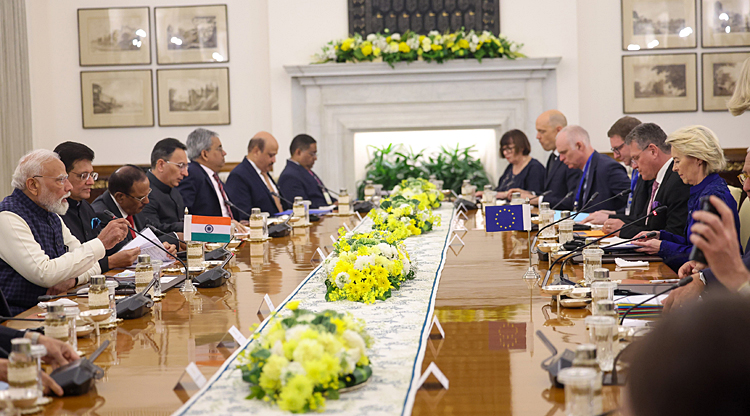
Signed just before the 16th India-EU Summit, co-chaired by European Council President Antonio Luis Santos da Costa and European Commission President Ursula von der Leyen the pact marks a milestone. India now stands alongside Japan and South Korea as the third Asian nation with such a comprehensive security and defence arrangement with the EU. This development signals Europe's strategic pivot towards the Indo-Pacific, aligning with India's growing role in global security architecture.
India now stands alongside Japan and South Korea as the third Asian nation with such a comprehensive security and defence arrangement with the EU
At the core of the partnership lie shared democratic principles, including pluralism, federalism, and the rule of law. Singh emphasised that these values underpin the burgeoning India-EU relationship. Defence Minister Rajnath Singh expressed optimism that they would evolve into tangible actions promoting global security, sustainable development, and equitable prosperity. The agreement, he said, embodies mutual trust and will bolster ties across economic, defence, and cultural spheres. It positions the two ancient civilisations for deeper collaboration amid rapid geopolitical shifts. Singh voiced hope for sustained momentum in these areas to forge even stronger bonds. The partnership extends beyond mere procurement, viewing India not only as a buyer but as a potential supplier and equal collaborator. Focus areas include maritime security, cybersecurity, counterterrorism, and nascent defence technologies. This broad scope signals a strategic elevation in bilateral engagement.
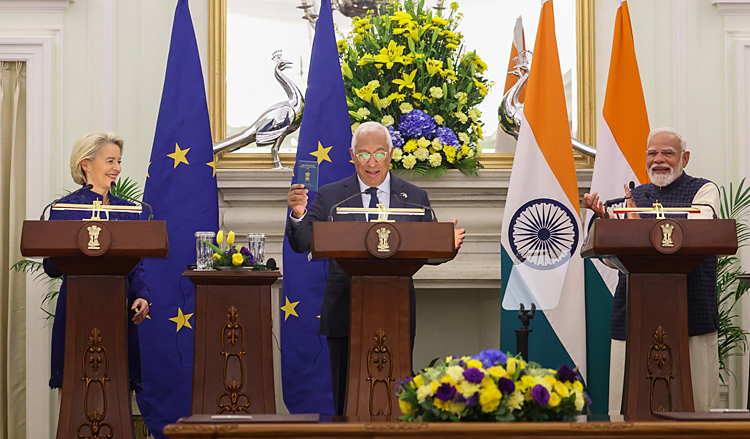
The India-EU Free Trade Agreement (FTA) had been in the works for the past decade and a half, but began gathering traction around 2023, when the US began to focus on developing an Indo-Pacific pivot. Relations gained considerable traction throughout 2025. A Leaders' Statement from the February visit by the College of Commissioners to India laid groundwork, agreeing to pursue a formal Security and Defence Partnership. Discussions involved the EU Commissioner for Defence and Space and India's Minister of State for Defence.
The partnership extends beyond mere procurement, viewing India not only as a buyer but as a potential supplier and equal collaborator
Further impetus came in December 2025, when a delegation from the Society of Indian Defence Manufacturers travelled to Brussels. They engaged directly with the EU Commissioner to nurture industrial synergies. This exchange highlighted potential for joint ventures in defence manufacturing. In September 2025, the EU Political and Security Committee, comprising representatives from all 27 member states ventured into Asia for the first time. High-level talks in India involved the Foreign Secretary, Deputy National Security Adviser, and Secretary (West), advancing strategic dialogues on pressing security concerns. Operational cooperation has also intensified through joint naval exercises. Notable instances include manoeuvres in the Indian Ocean in June 2025, the Gulf of Guinea in October 2023, and the Gulf of Aden in June 2021. Collaborative escort missions for humanitarian aid near Somalia occurred in 2018 and 2019, demonstrating practical interoperability.
For the EU, these Security and Defence Partnerships constitute a core element of its Strategic Compass, adopted in March 2022. This blueprint guides the bloc's security and defence posture, prioritising consistent engagement with non-EU partners through bespoke agreements rooted in mutual values and interests. The EU benefits from India's strategic location and growing defence capabilities, including advanced aerospace and missile systems. Enhanced people-to-people links, alongside economic pacts, promise multifaceted gains. As global alliances realign, this accord fortifies a rules-based order. These developments reflect a maturing partnership attuned to contemporary threats, from regional instability to hybrid warfare domains. For India, the deal aligns with its 'Make in India' push, opening avenues for indigenous firms to access EU markets and technologies. It also counters-balance influences in the Indo-Pacific amid tensions with China.
For India, the deal aligns with its 'Make in India' push, opening avenues for indigenous firms to access EU markets and technologies
Formalising the India-EU FTA may still take a few months because it has to be ratified by all 28 member nations of the EU. Challenges remain also for the India-EU Security & Defence Partnership, such as aligning regulatory frameworks and navigating export controls. But the proactive diplomacy signals resilience; expectations are high for concrete outcomes in co-development projects and intelligence sharing. The partnership bridges continents and also equips both parties to navigate volatility, fostering stability through innovation and dialogue. Meanwhile, India is also progressing defence projects with France, Germany and the UK through bilateral relationships.