



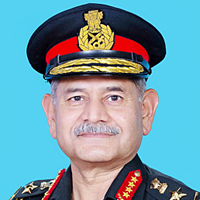
The insightful articles, inspiring narrations and analytical perspectives presented by the Editorial Team, establish an alluring connect with the reader. My compliments and best wishes to SP Guide Publications.
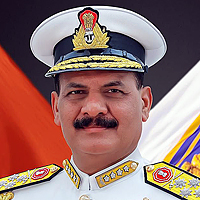
"Over the past 60 years, the growth of SP Guide Publications has mirrored the rising stature of Indian Navy. Its well-researched and informative magazines on Defence and Aerospace sector have served to shape an educated opinion of our military personnel, policy makers and the public alike. I wish SP's Publication team continued success, fair winds and following seas in all future endeavour!"

Since, its inception in 1964, SP Guide Publications has consistently demonstrated commitment to high-quality journalism in the aerospace and defence sectors, earning a well-deserved reputation as Asia's largest media house in this domain. I wish SP Guide Publications continued success in its pursuit of excellence.
The operationalisation of the India-Russia RELOS pact and its wider strategic significance, focusing on Arctic access and military logistics cooperation, signals geopolitical alignments and India's evolving defence partnerships
 |
The Author is Former Director General of Information Systems and A Special Forces Veteran, Indian Army |
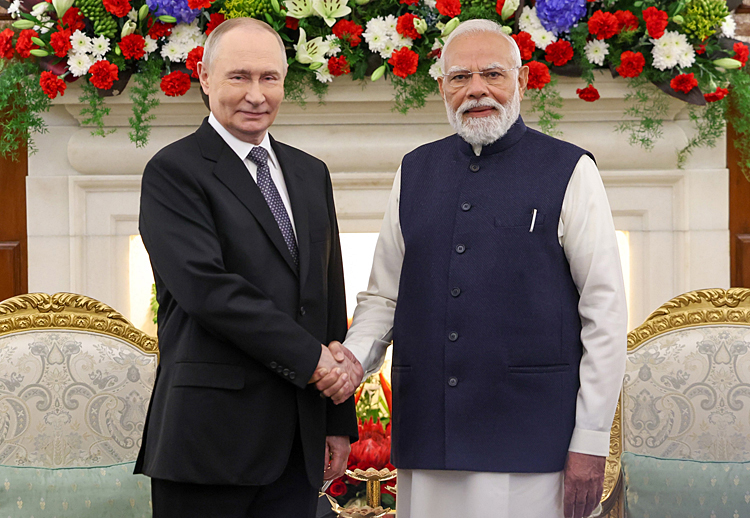
Headlines in the India media titled 'Pact allowing India, Russia to station 3,000 troops, 5 warships, 10 aircraft in each other's territory operational', published on April 19, 2026, has generated a big debate. According to the newspaper report, India and Russia can now share army bases, ports, and air bases and station up to 3,000 military personnel in each other's territory, as the Indo-Russian Reciprocal Exchange of Logistics Agreement (RELOS) - signed between New Delhi and Moscow in February 2025 - has become operational. The RELOS pact, which will remain operational in war and peacetime, allows the two nations to save money and time in long-distance missions. Under RELOS, cost reimbursement, meaning bartering instead of payment, is also possible.
India and Russia can now share army bases, ports, and air bases and station up to 3,000 military personnel in each other's territory, as the Indo-Russian Reciprocal Exchange of Logistics Agreement (RELOS)
The pact was reportedly signed in Moscow to boost military cooperation and logistics support between India and one of its most reliable allies. The agreement, under which India and Moscow agreed to station five battleships, ten fighter planes and 3,000 soldiers on each other's soil, will remain in effect for five years and can be extended. The bilateral agreement extends India's strategic reach to the Arctic region -- which is fast becoming the global maritime hotspot, as Russia and China have been increasing their presence in the vast maritime wilderness. Now India will be able to access the large ports in Russia's Murmansk and Severomorsk. Moscow is eyeing logistics cooperation from the Indian Navy in the Indian Ocean. The pact will provide Russia with support like refuelling, repair, spare parts and supplies. The pact, which will be operational in war and peacetime, allows the two nations to save money and time in long-distance missions.

According to the latest Stockholm International Peace Research Institute (SIPRI) report, Russia remained the biggest arms supplier of equipment and systems for the Indian Armed Forces in 2025. The reports noted that between 2020 and 2024, India was the world's second-largest arms importer, with Russia contributing 36 per cent to India's total defence purchase during that period.
India has signed reciprocal logistics exchange agreements with several key nations to enhance maritime/air mobility, simplify logistical support, and boost strategic interoperability; allowing for the mutual exchange of fuel, supplies, and spare parts at military bases. These countries include the US (2016), France (2018), Singapore (2018), South Korea (2019), Japan (2020), Australia (2020), the UK (2021), Vietnam (2022) and Russia (2025). These pacts enable India to extend its operational reach, particularly in the Indo-Pacific and with Russia in the Arctic region.
The bilateral agreement extends India's strategic reach to the Arctic region -- which is fast becoming the global maritime hotspot, as Russia and China have been increasing their presence in the vast maritime wilderness
As seen from the above, India has signed the first such reciprocal logistics exchange agreement with the United States in 2016. Termed LEMOA, or Logistics Exchange Memorandum of Agreement, the pact allows reciprocal access to military facilities for refuelling, supplies and logistics support. In the ongoing US-Israel war on Iran, with Iran having successfully inflicted heavy damage on US Navy's logistics bases in West Asia, US vessels are falling back on Indian ports for logistics support under LEMOA, as being enumerated by US military analysts.
The questions arising with regard to the Indo-Russian Reciprocal Exchange of Logistics Agreement (RELOS) are as under:
Speculation is that the India-Russia RELOS is being publicised at this stage in order to please Russia because under threat from the Donald Trump administration, India had stopped importing Russian oil and went in for Venezuelan Oil at a higher cost. Now Russia has refused to provide crude at a concessional rate to us as earlier. Because of the same US fear, India did not announce any Indo-Russian defence deal when Russian President Vladimir Putin visited India in December 2025 for the 23rd India-Russia Annual Bilateral Summit, marking the 25th anniversary of their strategic partnership.
There is also speculation that RELOS has been made public now as a signal to Trump, who has chosen Pakistan to mediate between the US and Iran instead of Prime Minister Modi who is preferred by many, especially by nations that have signed FTA with India because Trump is continuing to destroy global supply chains and economies.
These pacts enable India to extend its operational reach, particularly in the Indo-Pacific and with Russia in the Arctic region
Under what compulsions would New Delhi want Russian troops to be deployed in India? Is it because of the China threat or the US threat through Pakistan or Bangladesh. Is India incapable of defending itself against China because Foreign Minister Jaishankar says China is a big economy, while Iran has stood up to the US whose economy is 60 times that of Iran? Are we seeking the presence of Russian troops because of continuing manpower shortages in the Indian military?
Other than major bilateral exercises, when do we visualise 3,000 Indian troops, warships and aircraft in Russia? Is it to fight NATO in Ukraine? Is it to substitute Russia's manpower shortages, while we cannot even adequately stop the infiltrations through Pakistan, Bangladesh and Myanmar, and the continuing standoff against China along the entire Line of Control (LAC)? Another view is that followed by Russia, New Delhi may also be amenable to allowing US troops in India – calling it multi-alignment in Jaishankar's language. Hopefully, this is not the thinking.