



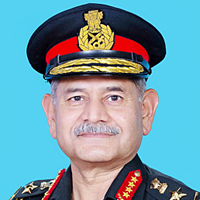
The insightful articles, inspiring narrations and analytical perspectives presented by the Editorial Team, establish an alluring connect with the reader. My compliments and best wishes to SP Guide Publications.
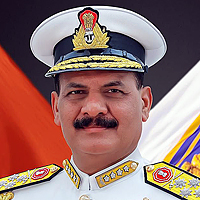
"Over the past 60 years, the growth of SP Guide Publications has mirrored the rising stature of Indian Navy. Its well-researched and informative magazines on Defence and Aerospace sector have served to shape an educated opinion of our military personnel, policy makers and the public alike. I wish SP's Publication team continued success, fair winds and following seas in all future endeavour!"

Since, its inception in 1964, SP Guide Publications has consistently demonstrated commitment to high-quality journalism in the aerospace and defence sectors, earning a well-deserved reputation as Asia's largest media house in this domain. I wish SP Guide Publications continued success in its pursuit of excellence.
India's assertive strategic autonomy, deepening ties with Russia, and defiance of US sanctions have sharply strained Indo-US relations. Putin's 2025 visit and the RELOS pact mark a major geopolitical shift, expanding Indo-Russian military access and openly challenging US influence in the region.
 |
The Author is former Chief of Staff of a frontline Corps in the North East and a former helicopter pilot. He earlier headed the China & neighbourhood desk at the Defence Intelligence Agency. He retired in July 2020 and held the appointment of Addl DG Information Systems at Army HQ. |

When Russian President Vladimir Putin touched down in New Delhi to be warmly received by Prime Minister Narendra Modi personally at the tarmac on December 4, 2025, it signalled a tectonic shift in global geopolitics. The visit didn't mark any major realignment. Nor did it contain any big ticket deals for defence hardware like the much anticipated Su-57 fifth generation jets or S-500 air defence shield, disappointing many observers as well as a hyperventilating media.
The first visit by President Putin in four years since the war broke out in Ukraine has moved some pawns on the chessboard that have sent shockwaves in the US led western hemisphere
The joint statement issued following their talks simply and blandly said: "The leaders emphasised that in the current complex, tense, and uncertain geopolitical situation, Russian-Indian ties remain resilient to external pressure." Yet beneath the veneer of diplomatese, the first visit by President Putin in four years since the war broke out in Ukraine has moved some pawns on the chessboard that have sent shockwaves in the US led western hemisphere.
The souring of Indo-US relations became discernible years earlier in 2022 once India began demonstrating its quest for strategic autonomy. In 2019, the US administration during Trump's first term imposed sanctions on Iranian oil. India had ended all imports of oil from Iran to grudgingly comply with threatened US sanctions. The shift had caused pain at home, with Iran formerly supplying 10 per cent of the country's oil needs.

Not this time though. When US imposed unprecedented and sweeping sanctions on Russia, following its February 2022 invasion of Ukraine and targeted its oil and gas exports to choke its economy aiming to create a domestic situation ripe for overthrow of Putin, India chose to defy the west, pushing its share of discounted Russian crude from under 1 per cent to nearly 40 per cent of total crude imports at 1.9 million barrels per day.
When US imposed unprecedented and sweeping sanctions on Russia, India chose to defy the west, pushing its share of discounted Russian crude from under 1 per cent to nearly 40 per cent of total crude imports
The defiance triggered consequences. The American Deep State stepped up its anti-India operations while the mask was kept intact with QUAD summits and even the recently enacted 2026 fiscal National Defence Authorisation Act (NDAA) assigning India a key role in Washington's Indo-Pacific and nuclear strategies. With its decades old ties with Pakistani ISI which works as its bulwark in the region, the US under the garb of a youth movement, overthrew the India-friendly Sheikh Hasina government who had explicitly said in a 2023 speech that "there will be no problem to hold on to power if Saint Martin's Island is leased out to the US". Just about a year after exit of Sheikh Hasina an American special operations commander, Terrence Arvelle Jackson, was found dead in his room at The Westin Hotel in Dhaka's upmarket Gulshan neighbourhood on August 31. Reportedly, over a dozen other operatives drawn from the ISI and Turkish intelligence were also killed in that operation, confirming that Bangladesh has become the staging post for anti-India operations exploiting her vulnerabilities in the North-East including the 'the Chicken's Neck'.
India became the second country to be imposed with a punishing 50 per cent tariff while trade talks go on endlessly as India refuses to budge on opening up her markets
That continued defiance in concert with other BRICS member-nations to find institutional methods to bypass the US controlled Bretton Woods institutions, the IMF and the World Bank, the international payment settlement system SWIFT and the dominance of Petrodollar has enraged the Washington establishment no end. Along with Brazil, India became the second country to be imposed with a punishing 50 per cent tariff while trade talks go on endlessly as India refuses to budge on opening up her markets to American agricultural and dairy products. Beneath the surface, India's refusal to buy the American F-35 jets maybe the real sticking point.

A major turning point, of course, was Operation Sindoor in mid-May 2025 in response to the tragic Pahalgam massacre. It missed no strategists' attention that the American-Pakistani or more accurately put, the CIA-ISI joint operation centres, strategic communication networks, F-16s in aprons and perhaps nuclear facilities in Kirana Hills and Nur Khan airbase were lethally damaged by a distinctively Indo-Russian joint venture showpiece, the BrahMos.
If the US expected India to buckle under its 50 per cent tariffs, well, it grew at a whopping 8.2 per cent last quarter, faster than China at five per cent and faster than America at 2.1
The lines were firmly drawn. Trump embraced the radical Pakistani mullah General Asim Munir, cut sweet family deals for mining crypto currency, take hold of rare earth mineral of Baluchistan and publicly drew his own binary, ditching two decades of efforts by his predecessors to progress Indo-US relations including the civil nuclear deal of 2008 under President Bush. By end-May 2025, Elon Musk exited the White House finding that his efforts to shut down agencies like the USAID that funded millions of free-printed dollars globally under the guise of humanitarian aid to finance dissidence, riots, street mobs and help overthrow regimes defying the Deep State has been undermined.
The epic sanctions imposed by the US led west has gone nowhere. The 40 odd countries that embraced the sanction onslaught with enthusiasm are struggling to keep their own economies afloat. Europe at its peak economic performance powered by cheap clean Russian energy had a share of 25 per cent of the global GDP. Now that has come down to about 14 per cent and Europe is drifting towards 'civilisational erasure' as per a recently published White House paper. While Germany, the economic powerhouse of Europe grew at a disastrous -0.5 per cent in 2024 and UK 1.1 per cent, the victim Russia which was expected to collapse under the weight of unprecedented sanctions grew at sprightly 4.1 per cent.

The story is even more breath-taking as regards India. If the US expected India to buckle under its 50 per cent tariffs, well, it grew at a whopping 8.2 per cent last quarter, faster than China at five per cent and faster than America at 2.1 per cent. In PPP terms, India has reached 14 trillion dollars in 2024, third largest in the world.
The Putin visit and the Reciprocal Exchange of Logistics Support (RELOS) Agreement they signed marking a roadmap for $100 billion bilateral trade by 2030 completely bypassing the USD alters the strategic calculus altogether
In this backdrop, the Putin visit and the Reciprocal Exchange of Logistics Support (RELOS) Agreement they signed marking a roadmap for $100 billion bilateral trade by 2030 completely bypassing the USD alters the strategic calculus altogether. It hides a huge strategic shift. While Indian ships, submarines and aircraft can operate from Russian bases stretching from the Arctic Ocean to the remote corners of Eurasia, Russia gets the same access in the Indian coastline. It's a massive move nobody saw coming, effectively challenging the string of pearls painstakingly built by China or the US bases at Diego Garcia or the projected ones at Saint Martin in Bangladesh or west of Gwadar in Pakistan.
A recall of the 1971 events is necessary. Then USSR had to move its nuclear submarine led fleet from far-off Vladivostok to counter the US 7th Fleet that had sailed towards Bay of Bengal to pressure India to end the war. This time, they may be lurking nearby, some docked in the safety of secret Indian submarine bases. The gloves are off!