




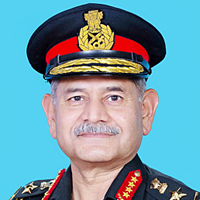
The insightful articles, inspiring narrations and analytical perspectives presented by the Editorial Team, establish an alluring connect with the reader. My compliments and best wishes to SP Guide Publications.
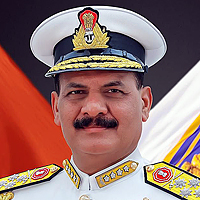
"Over the past 60 years, the growth of SP Guide Publications has mirrored the rising stature of Indian Navy. Its well-researched and informative magazines on Defence and Aerospace sector have served to shape an educated opinion of our military personnel, policy makers and the public alike. I wish SP's Publication team continued success, fair winds and following seas in all future endeavour!"

Since, its inception in 1964, SP Guide Publications has consistently demonstrated commitment to high-quality journalism in the aerospace and defence sectors, earning a well-deserved reputation as Asia's largest media house in this domain. I wish SP Guide Publications continued success in its pursuit of excellence.
In response to repeated Chinese attempts to rename territories in Arunachal Pradesh, India's Ministry of Home Affairs has formally identified and standardised 27 strategic locations on the official Survey of India (SoI) map
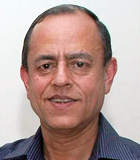 |
The Author is Former Director General of Information Systems and A Special Forces Veteran, Indian Army |
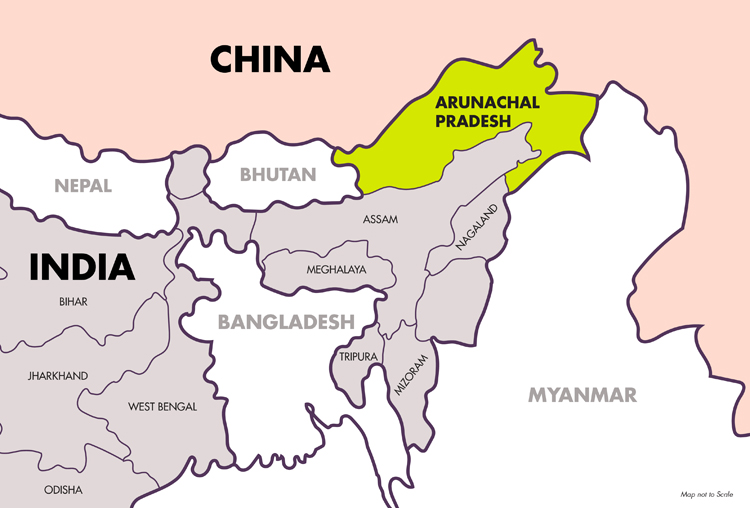
India has taken a decisive step to counter repeated Chinese attempts at renaming places in Arunachal Pradesh by formally identifying 27 locations with their standard names on the official Survey of India (SoI) map, according to news reports of August 10, 2026. The actual announcement was made by the Ministry of Home Affairs (MHA) on August 7, 2026. The MHA statement emphasised that the move was aimed at ensuring accurate recognition and raising public awareness about these areas.
The updated SoI map formally includes key historical flashpoints (like Long Ju and Thag La pass), vital border villages (such as Maja and Jaswant Garh), and crucial logistics nodes (like Jairampur).
Among the places formally identified and marked is Long Ju, situated along the Line of Actual Control (LAC). This location holds historical significance as one of the earliest flashpoints between India and China in 1959, when Chinese forces entered the area. The inclusion of Long Ju underscores India's determination to reaffirm sovereignty over sensitive border regions. The village of Maja, located near Long Ju in Upper Subansiri District, has also been added to the official map.
Other notable inclusions are Bisa village, a strategically important high-altitude mountain pass, and passes such as Dzo La, Riza La, and Pukur La. These areas are critical for both defence and connectivity in the frontier state of Arunachal Pradesh. One of the most strategically significant passes, Thag La, has also been formally identified, which was the site of one of the opening battles between Indian and Chinese forces during 1962 war. Jairampur in Changlang district, a vital logistics hub (termed the gateway to the eastern border region) has similarly been marked.
China has aggressively assigned fictitious "standardised names" to a total of 112 locations across six separate batches between April 2017 and April 2026 to assert its claims over "Zangnan" (South Tibet).
The list further includes Sambho Sarovar, a high-altitude lake, along with Bara Kundun and Chhota Kundun in Eastern Arunachal Pradesh. Several villages such as Dhan Bari, Pritnagar, Teritnagar, Ramnagar, Sagar, Padma, Jyotinagar, and Baisakhi have also been identified. Jaswant Garh, which houses the memorial of Indian martyr Jaswant Singh Rawat on the Tawang Road, has been included.
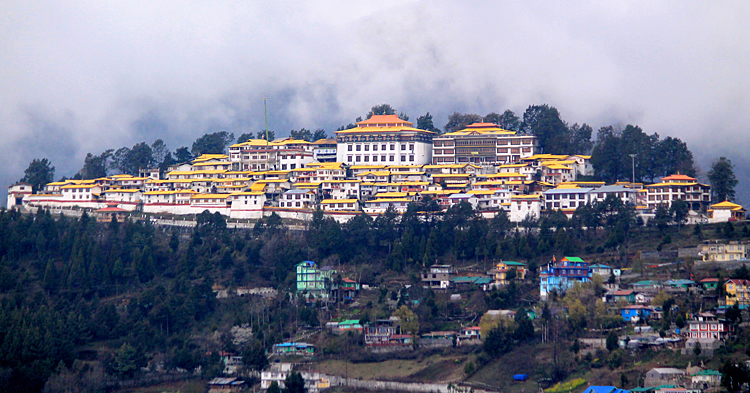
The Sher-e-Thapa Memorial, honouring Trilok Singh Thapa (hero of 1962) has been recognised. Other places like Chhota Ropuk, Bara Ropuk, Shivaji Nagar, Sunpura, Kamlang Nagar, and Buddhamandir have also been listed. India has consistently dismissed Chinese efforts to assign what it calls "fictitious names" to Indian territory, aimed at creating baseless narratives.
The government has also warned that these actions could derail ongoing efforts to normalise bilateral ties between the two countries. This formal identification of locations is a strategic assertion of India's territorial integrity. By marking these places on SoI map, India has reinforced its stance against external attempts to distort historical and geographical facts.
Beijing strongly rejected India's map updates, labeling the standardisation as a "unilateral provocation," while India's MEA maintained that assigning artificial names cannot alter the reality that Arunachal Pradesh is an integral part of India.
China began renaming places in Arunachal Pradesh in April 2017. China refers to Arunachal Pradesh as "Zangnan" or "South Tibet", and plays this under the guise of releasing lists of "standardised geographical names" to assert its territorial claims. So far, China has assigned so-called standardised names to a total of 112 locations across six separate instances:
The Ministry of External Affairs (MEA)has been rejecting these Chinese actions as mischievous attempts to invent a false narrative; maintaining that assigning fictitious names cannot alter the reality that Arunachal Pradesh is integral part of India. But it is the first time that the MHA has formally updated the official SoI maps to standardise 27 key locations under their rightful Indian names.
China reacted sharply to India's August 2026 decision to formally standardise 27 locations on the SoI. China's Foreign Ministry spokesperson Guo Jiakun stated that China does not recognise the "so-called Arunachal Pradesh illegally set up by India." The ministry asserted that India's attempt to replace historical names with standard Indian names does not change the "fact" that the Zangnan region (Southern Tibet) belongs to China.
The Global Times criticised the move; labelling India's map alignment as an act of self-deception and a unilateral provocation. Chinese state analysts warned that India's counter-move occurred just as bilateral relations were showing signs of stability; turning the border dispute into a larger issue could stifle improving political ties and jeopardise upcoming high-level multilateral engagements.
The timing of India's MHA map updates is viewed by analysts as a firm assertion of territorial integrity amid ongoing bilateral tensions, continued border talks, and upcoming high-level regional summits.
What took India so long to correct the SoI maps when China has been renaming places since 2017, and why only 27 key locations have been corrected, not all the 112 locations renamed by China? Multiple sources have pointed out that the MHA acted because China has surreptitiously occupied the Shera 5 (upper Taksing area) and Sipi 6 (Gelemo area) points inside Arunachal Pradesh.
Umpteen number of border talks with China (NSA Ajit Doval and EAM S. Jaishankar representing India) have achieved little as China holds all the aces. India acquiesced to China's demand of keeping the border issue separate from developing bilateral relations, ignoring the LAC changes China affected in Eastern Ladakh during 2020. An old Chinese proverb says: Leave a loophole for a cornered enemy (do not press a desperate foe too hard). It is possible name changes China made in August is due to the 2026 BRICS Summit in New Delhi next month, which President Xi Jinping attended.
Finally, India must be more assertive with China. Brahma Chellaney writes that Jaishankar assured China's Foreign Minister Wang Yi of India respecting China's sovereignty (Tibet and Taiwan) according to the official Chinese readout. Asked specifically about the assurance on Tibet-Taiwan, MEA evaded the query. China doesn't respect India's territorial integrity and sovereignty.
Why hasn't Jaishankar spoken to Wang Yi that he was misquoted? Why hasn't the MEA demanded that the Chinese statement be corrected and reissued? Doesn't this amount to pusillanimity?