






The insightful articles, inspiring narrations and analytical perspectives presented by the Editorial Team, establish an alluring connect with the reader. My compliments and best wishes to SP Guide Publications.
"Over the past 60 years, the growth of SP Guide Publications has mirrored the rising stature of Indian Navy. Its well-researched and informative magazines on Defence and Aerospace sector have served to shape an educated opinion of our military personnel, policy makers and the public alike. I wish SP's Publication team continued success, fair winds and following seas in all future endeavour!"

Since, its inception in 1964, SP Guide Publications has consistently demonstrated commitment to high-quality journalism in the aerospace and defence sectors, earning a well-deserved reputation as Asia's largest media house in this domain. I wish SP Guide Publications continued success in its pursuit of excellence.
The Rocket-cum-Missile Force is part of a larger 2026-2027 transformation declared as the 'Years of Networking and Data'
 |
The Author is Former Director General of Information Systems and A Special Forces Veteran, Indian Army |
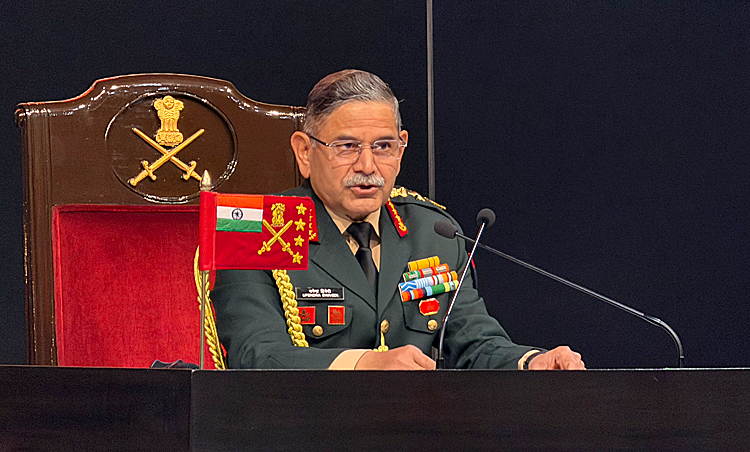
In his pre-Army Day 2026 press conference, Chief of the Army Staff General Upendra Dwivedi stated that the Indian Army is planning to raise a new, dedicated Rocket-cum-Missile Force, to significantly boost long-range strike capabilities, inspired by similar formations in China and Pakistan. It is the need of the hour that "we also have such a force", he said addressing the press conference. The initiative draws from Operation Sindoor (launched in May 2025), which highlighted the critical need for deep-strike precision weapons; focusing on indigenous systems like Pinaka, Pralay, and BrahMos, aims to create a data-driven, integrated force, enhancing India's strategic deterrence amid changing regional dynamics. The new force will leverage modern, technology-driven weaponry for decisive battlefield impact, moving beyond existing Artillery and Air Defence structures.
Chief of the Army Staff General Upendra Dwivedi stated that the Indian Army is planning to raise a new, dedicated Rocket-cum-Missile Force to significantly boost long-range strike capabilities
The goal is to achieve greater precision and longer ranges, with contracts signed for launchers reaching up to 300-km. He said the discussions are ongoing about its placement, initially under the Artillery, but ultimately aiming for a more integrated structure within future theatre commands. The move supports the 'Make in India' initiative by utilising advanced, domestically produced systems, including future weapon systems like 'Suryastra' - a new universal multi-calibre rocket launcher with a 300 km strike range, developed through collaboration with Israeli technology. The move is part of a larger military transformation, alongside establishing Integrated Battle Groups (IBGs) and increased drone utilisation, to build a faster, more data-driven force. He gave a timeline for further restructuring, saying "A large number of Government Sanction Letters (31) for organisational changes have been approved over the past 14–15 months, including IBGisation of 17 Corps and raising of aviation brigades. Territorial Army recruitment recommenced in 2025, after a gap of five years."
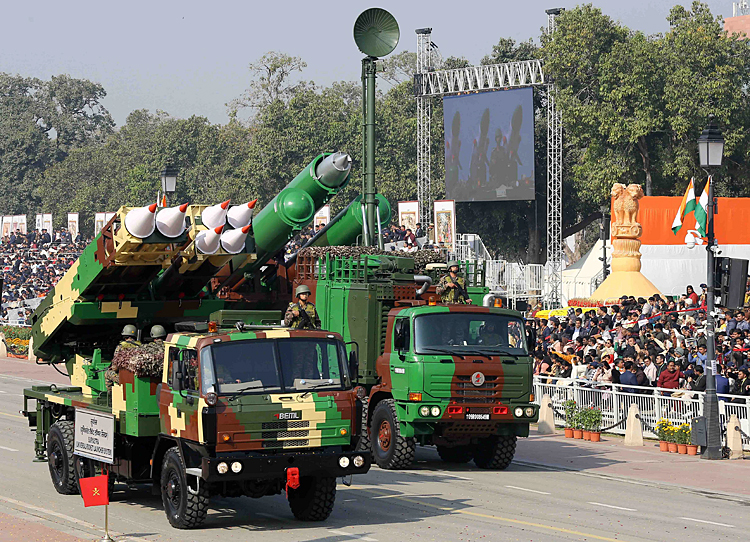
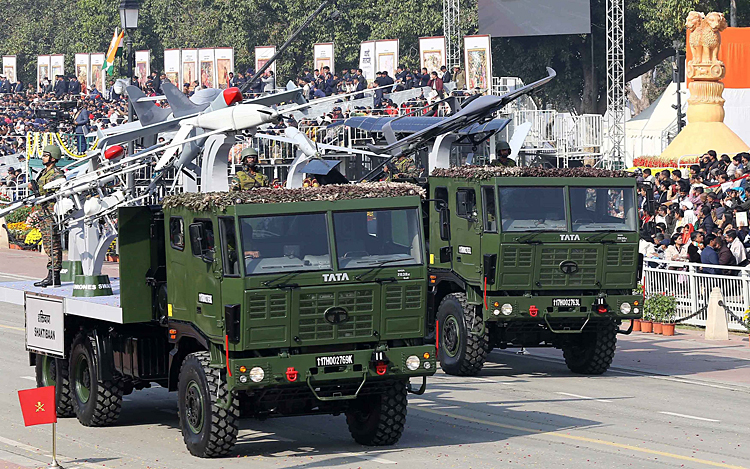
The Rocket-cum-Missile Force is part of a larger 2026-2027 transformation declared as the "Years of Networking and Data". Other new formations include: Rudra Brigades - all-arms brigades (infantry, armour, artillery, and drones) designed for high-tempo, multi-domain operations; Bhairav Battalions - light commando units intended to bridge the gap between regular infantry and Special Forces; and, Shaktibaan Regiments - artillery units specialised in utilising unmanned aerial systems (UAS) for real-time targeting. This strategic development aims to bolster national defence and strike power.
Operation Sindoor highlighted the critical need for deep-strike precision weapons, focusing on indigenous systems like Pinaka, Pralay, and BrahMos, aimed to create a data-driven, integrated force, enhancing India's strategic deterrence amid changing regional dynamics.
General Dwivedi said, "Pakistan has established a rocket force, and China has also created one." China's PLA (People's Liberation Army) Rocket Force (PLARF) is a potent wing of the country's military. China has been constantly enhancing the combat might of the PLARF since 2016. In his remarks, General Dwivedi also noted that the Indian military has boosted its long-range strike capabilities and cited induction of BrahMos, Pralay, Pinaka and other similar missiles to augment its combat prowess. "Rockets and missiles have become interdependent to each other in today's time. If we want a major impact, then we need both rockets as well as missiles," he said.
General Dwivedi further said, "We have to decide whether it will be (operated) at the Army level or it will be directly under the Ministry of Defence or at the level of CDS (Chief of Defence Staff). This is the question which we need to decide" he said, adding that initially, it will be under the Army's artillery regiments. "It may see a different look in terms of the size, scope and the command and control in future," he said. Currently, the Corps of Army Air Defence (AAD) and the Artillery regiments are largely responsible for the rockets and missiles in the Army.
Reports of April 15, 2023, had stated that India is "moving towards" establishing a Rocket Force for the Armed Forces, to thwart the Chinese threat, with plans to acquire around 250 more Pralay ballistic missiles, as was pointed out in these columns in May 2023 (https://www.spsmai.com/experts-speak/?id=1333&q=Upgrading-Rocket-Forces-of-India). India's Rocket Forces would need to incorporate hundreds or rather thousands of subsonic cruise missiles plus ballistic missiles to serve as India's primary instrument of strategic nuclear deterrence, as well as meeting the requirement of long to medium precision strike. It was also pointed out that it is unclear whether the Rocket Force will include part of the assets of the SFC or come up as an independent entity. Also, in establishing the Rocket Force, development of "low-cost" subsonic cruise missiles would be essential considering the contingencies where multiple missiles may have to be used.
"Rockets and missiles have become interdependent to each other in today's time. If we want a major impact, then we need both rockets as well as missiles" - General Upendra Dwivedi, Chief of the Army Staff
As General Dwivedi has now mentioned, China's PLAARF has been in existence since 2016. Pakistan announced the formation of its Army Rocket Force Command on August 13, 2013, a day ahead of Pakistan's 78th Independence Day and three months after the 2025 India–Pakistan conflict. With India having a large military, why have we taken so long to announce a Rocket-cum-Missile Force, and even now are unsure of the form it would take and its command and control? With all the war games conducted over the last several years, did we have to wait for Operation 'Sindoor' to arrive at this necessity.
Establishment of Integrated Theatre Commands (ITCs) has been in under discussion for several years, pursuant to the 1999 Kargil Review Committee (KRC) unequivocally highlighting serious deficiencies in joint planning, intelligence coordination, and command integration among the Services; underscoring the need for integrated command structures. However, the formation of Theatre Commands may still take more time, specifically because of the shortage of operational squadrons of the Indian Air Force, which is much below the authorised numbers. Whether the government declares theatreisation overlooking these aspects or not, prudence demands that we establish a Rocket-cum-Missile Force at the earliest. We already have the Strategic Forces Command (SFC), Defence Cyber Agency, Defence Space Agency, and the Armed Forces Special Operations Division (AFSOD) in place. Should the Rocket-cum-Missile Force wait for theatreisation?