





The insightful articles, inspiring narrations and analytical perspectives presented by the Editorial Team, establish an alluring connect with the reader. My compliments and best wishes to SP Guide Publications.

"Over the past 60 years, the growth of SP Guide Publications has mirrored the rising stature of Indian Navy. Its well-researched and informative magazines on Defence and Aerospace sector have served to shape an educated opinion of our military personnel, policy makers and the public alike. I wish SP's Publication team continued success, fair winds and following seas in all future endeavour!"

Since, its inception in 1964, SP Guide Publications has consistently demonstrated commitment to high-quality journalism in the aerospace and defence sectors, earning a well-deserved reputation as Asia's largest media house in this domain. I wish SP Guide Publications continued success in its pursuit of excellence.
India is pushing towards advanced long-range missile systems capable of penetrating modern air defences amid evolving global missile competition and lessons emerging from contemporary conflicts
 |
The Author is Former Director General of Information Systems and A Special Forces Veteran, Indian Army |
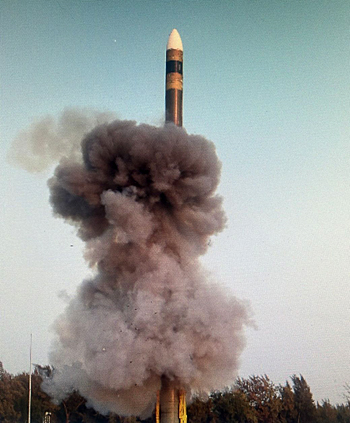
India's next-generation intercontinental ballistic missile (ICBM) capabilities are primarily focused on the advanced Agni-V missiles and the ambitious 'Surya' missile. The Agni-V is a MIRV-capable, road-mobile ICBM with a range exceeding 5,000 to 7,000 km, while the Surya missile is speculated to be a 12,000+ km range, three-stage solid/liquid fuel missile. Agni-V, already in service, is a solid-fuel, MIRV-capable (Multiple Independently Targetable Reentry Vehicle) missile allowing a single missile to deliver multiple warheads to different targets.
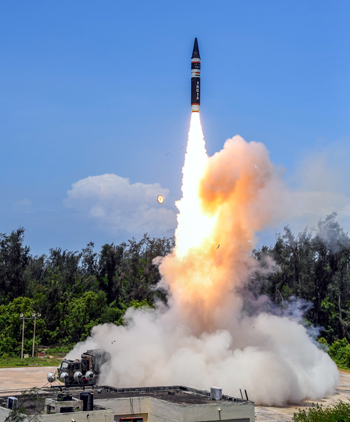
Agni-P (Agni-Prime) is a next-generation, advanced, canisterised surface-to-surface ballistic missile with a range of 1,000 to 2,000 km. It utilises technologies developed for the Agni-IV and Agni-V, enhancing speed and accuracy. The K-6 missile being developed for the Indian Navy is a submarine-launched ballistic missile (SLBM) intended for the S5-class nuclear submarines, designed with a 6,000 to 8,000 km range and MIRV capability. Agni-V and future systems feature MIRV for enhanced strike capabilities.
The objective of India's next generation of intercontinental missile project is to ensure the missile can evade the world's best missile defence systems, such as Russia's S-500, America's THAAD, and China's HQ-19
According to news reports of April 3, 2026, India is developing its next generation of intercontinental missile, which is reportedly a significant step up from the Agni-5 in terms of range and effect. The objective of the project is to ensure the missile can evade the world's best missile defence systems, such as Russia's S-500, America's THAAD, and China's HQ-19. The project aims to develop a missile that is not only powerful but also lighter than the Agni-5 - the nuclear-capable, intermediate-range ballistic missile (IRBM) developed by the Defence Research and Development Organisation (DRDO). The platform is expected to carry 10 to 12 warheads and have a range exceeding 10,000 km while the Agni-5's range is said to be between 5,000 and 5,500 km. While the name of the missile has not been disclosed, in all probability it is the Surya ICBM having a range exceeding 12,000 km.
Earlier reports indicated that the design of the new missile was completed in 2025. The technology of the K-5 and K-6 Submarine-Launched Ballistic Missiles (SLBMs), launched from under the sea, is being used for the development of the new missile, the daily claimed. As K-5 missiles are designed to be stored in submarine launch tubes, making use of the same technology will help the new missile operate faster and more efficiently.
The use of Manoeuvrable Re-entry Vehicles (MaRVs), advanced decoys to deceive radars, and radar-absorbing coatings will be key to beating the S-500, THAAD, and similar systems
The next-gen missile is expected to carry warheads weighing up to three tonnes. To reduce its weight, advanced composite materials will be used in place of steel parts. This will help reduce the missile's weight by more than 20 per cent, as using these components in the missile's engine casings and other parts will increase fuel efficiency and range.
The use of Manoeuvrable Re-entry Vehicles (MaRVs), advanced decoys to deceive radars, and radar-absorbing coatings will be key to beating the S-500, THAAD, and similar systems. A Manoeuvrable Re-entry Vehicle (MaRV) is a type of ballistic missile payload designed to change its flight path after re-entering the Earth's atmosphere. A MaRV's capability to change its trajectory makes it possible to evade enemy missile defence systems.
The Pentagon estimates that China has significantly expanded its missile forces, with ICBMs capable of covering most, if not all, of the globe. China's ICBMs have estimated operational ranges between 7,000 km and over 15,000 km, with some reports suggesting advanced variants like the DF-5C could reach up to 20,000 km, enabling global strike capabilities. These road-mobile and silo-based missiles can hit the US mainland. The DF-41, having a range of 12,000 to 15,000 km is a road-mobile, ICBM carrying MIRVs. The DF-5A/5B/5C having a range of 13,000 to 20,000 km is a silo-based, long-range liquid-fuel ICBM. The DF-31/31A/31AG having a range of 7,000 to 11,700 km is a solid-fuel road-mobile ICBM, while the DF-4 having a range of 4,500 to 5,500+ km, is an IRBM. Pakistan's missile arsenal consists of short to medium-range ballistic and cruise missiles, with ranges varying from 60 km to 2,750 km. The longest-range missile, the Shaheen-III, can travel up to 2,750 km, enabling it to reach all of India and parts of the Middle East. The arsenal is designed for both conventional and nuclear payloads, including multiple warhead (MIRV) capabilities.
The Pentagon estimates that China has significantly expanded its missile forces, with ICBMs capable of covering most, if not all, of the globe
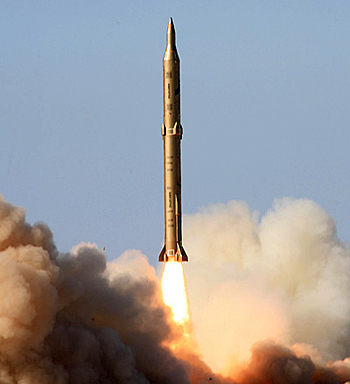
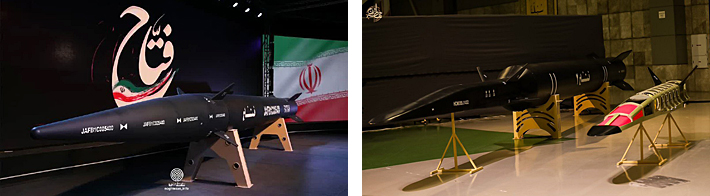
It is interesting to watch how in the US-Israel war on Iran, Tehran has been using its missiles, Iran's missiles, including hypersonic and manoeuvrable variants, bypass air defences by using swarms of low-cost drones and cruise missiles to overwhelm systems. By launching in waves, they deplete expensive, limited interceptors (like US-supplied Patriot missiles) in Gulf countries and force Israel's systems, including Iron Beam, to handle simultaneous attacks, decreasing detection times and increasing success rates. Iran utilises drones and cruise missiles to trigger automated detection, forcing defenders to spend costly intercepts on low-value targets. Platforms like the Fattah-2 use manoeuvrable warheads, making them erratic and challenging for interceptors. Iranian strategy, often employing Chinese BeiDou-3 navigation, relies on overloading systems in, say, Iraq, Syria, and Jordan to test and damage radar coverage before reaching targets. Gulf nations have been facing rapidly depleting US Patriot missile stocks, forcing a shift in tactics to prioritise high-value targets.
Iranian missiles like the Sejjil are solid-fuel, allowing faster launch speeds and decreasing warning time. Missiles, like the Haj Qassem and medium-range ballistic missiles (MRBMs), are specifically designed to overwhelm systems like Arrow 3 and David's Sling by using multi-warhead capabilities. Iran's 'Saqr 358; (or 358 missile) is a long-range "loitering" surface-to-air missile (SAM) designed to target drones, helicopters, and surveillance aircraft. It uses a two-stage propulsion system (rocket booster for launch and a turbojet for flight) allowing it to loiter in a figure-eight pattern for extended periods. It is a sort of loitering smart air mine that travels to a designated area (up to 28,000 feet) and patrols in a figure of eight pattern, for a prolonged period, using an infrared seeker to find and destroy targets. The missile is designed to counter the intelligence and surveillance capabilities of, for instance, US and Israeli aircraft in West Asia.