






The insightful articles, inspiring narrations and analytical perspectives presented by the Editorial Team, establish an alluring connect with the reader. My compliments and best wishes to SP Guide Publications.

"Over the past 60 years, the growth of SP Guide Publications has mirrored the rising stature of Indian Navy. Its well-researched and informative magazines on Defence and Aerospace sector have served to shape an educated opinion of our military personnel, policy makers and the public alike. I wish SP's Publication team continued success, fair winds and following seas in all future endeavour!"

Since, its inception in 1964, SP Guide Publications has consistently demonstrated commitment to high-quality journalism in the aerospace and defence sectors, earning a well-deserved reputation as Asia's largest media house in this domain. I wish SP Guide Publications continued success in its pursuit of excellence.
India's ramjet-powered 155mm artillery breakthrough marks a major leap in defence capability, significantly extending strike range and lethality while supporting Atmanirbhar Bharat. In parallel, scramjet advancements by DRDL, signal progress toward sustained hypersonic cruise missile technology, strengthening India's long-range and high-speed strategic deterrence capabilities.
 |
The Author is Former Director General of Information Systems and A Special Forces Veteran, Indian Army |
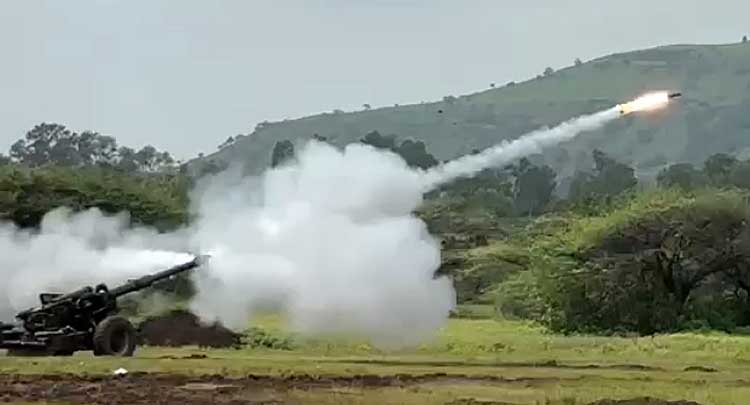
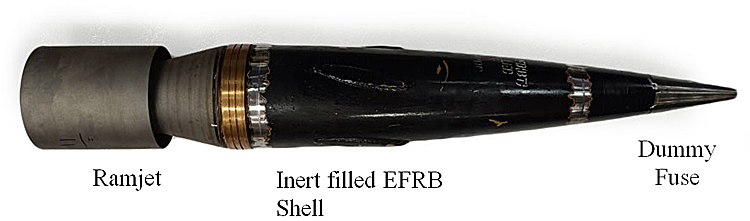
A Ramjet is a form of air-breathing jet engine that has no major moving parts (compressors or turbines), relying instead on its high-speed forward motion to compress incoming air for combustion. It is designed specifically for sustained supersonic speeds, typically operating efficiently between Mach 3 and Mach 6. In the defence sector, Ramjet technology is a game-changer that provides higher speeds, significantly longer range, and superior manoeuvrability compared to traditional rocket-powered missiles, all while being more compact and cost-effective. Ramjets are critical for modernising weapon systems, focusing on long-range and high-speed strikes. Ramjets can optimise artillery ammunition, supersonic and hypersonic missiles, air defence systems, Unmanned Aerial Vehicles (UAVs) and drones.
India has positioned itself as the first country in the world in early January 2026 to successfully test and move toward the operational deployment of ramjet-powered 155mm artillery shells
India has positioned itself as the first country in the world in early January 2026 to successfully test and move toward the operational deployment of ramjet-powered 155mm artillery shells. Globally, other nations like Norway, the UK and the US have showcased ramjet prototypes, but India is the first nation to reach operational deployment at this scale. Developed by IIT Madras in collaboration with the Indian Army and the Army Technology Board (ATB), this technology significantly increases the range and lethality of tube artillery. Initial validation trials were conducted at the School of Artillery in Deolali in September 2025, followed by extensive field firing tests at the Pokhran range in Rajasthan in December 2025 and January 2026.
Unlike conventional shells that rely solely on initial gun powder, this new ammunition uses an "air-breathing" ramjet engine that ignites mid-flight, compressing atmospheric air to generate sustained thrust once the shell reaches supersonic speeds (around Mach 2-3). These shells are designed to be used with existing 155mm artillery guns, including the M777 ultra-light howitzer, Dhanush, and K9 Vajra, which means that no new platforms are required to adopt this technology. Notably, these ramjet-assisted shells can increase the range of existing 155mm artillery guns by 30 per cent to 50 per cent. For example, the range of the Advanced Towed Artillery Gun System (ATAGS) has increased from 40 km to nearly 70 km, the K9 Vajra extends from 36 km to 62 km, Dhanush extends from 30 km to nearly 55 km, and M777 Howitzer from 24 km to roughly 43 km.
These ramjet-assisted artillery shells can increase the range of existing 155mm artillery guns by 30 per cent to 50 per cent
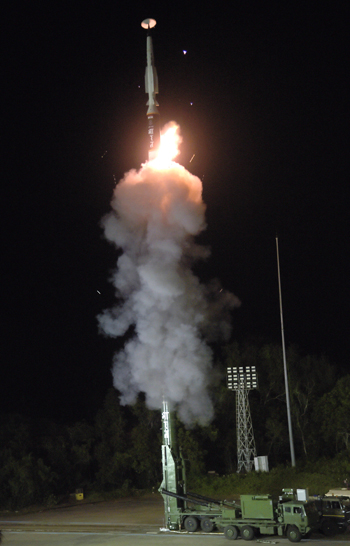
This development is part of India's Atmanirbhar Bharat (self-reliant India) initiative in defence technology, aimed at giving the Indian Army a massive advantage in deep-strike roles, especially in high-altitude, mountainous terrain. These ramjet shells integrate the indigenous NavIC satellite guidance for high-precision strikes, effectively bridging the gap between tube artillery and more expensive tactical missiles. Munitions India Limited (MIL) is slated for large-scale production of these indigenous rounds.
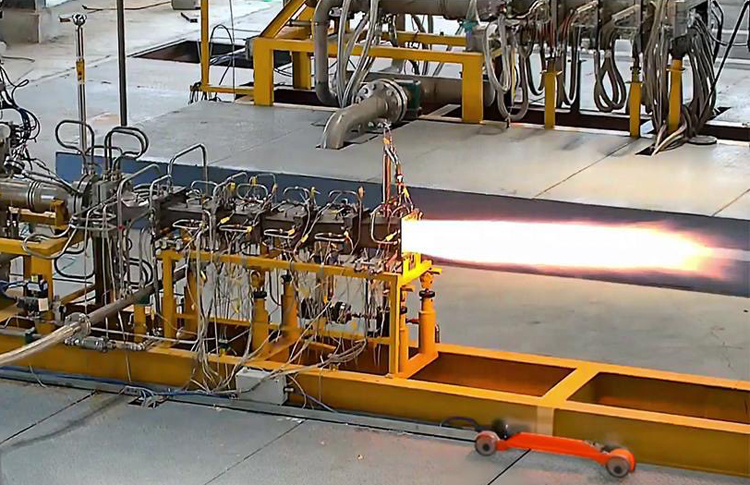
On April 25, 2025, the Defence Research and Development Laboratory (DRDL) had successfully ground-tested a subscale actively cooled scramjet combustor for more than 1,000 seconds at its Scramjet Connect Pipe Test (SCPT) facility. Earlier, the maiden ground test of the full-scale combustor, lasting 120 seconds, took place on January 21, 2025.
This year, on January 9, 2026, the DRDL successfully conducted an extensive, long-duration ground test of its Actively Cooled, Full-Scale Scramjet Combustor, achieving a run time of over 12 minutes at the same facility. With these successful tests, the scramjet combustor is now poised for full-scale, flight-worthy testing.
A scramjet engine is an absolute prerequisite for sustained, level hypersonic flight within the atmosphere
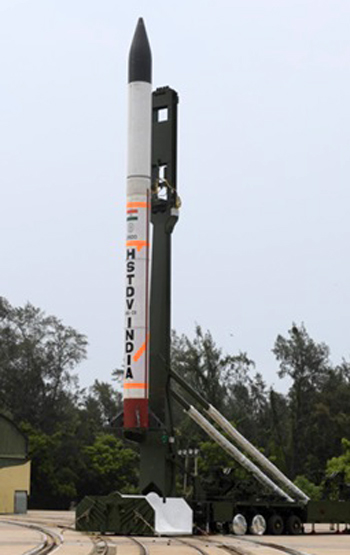
A scramjet engine differs fundamentally from a ramjet engine, such as those powering the Akash and BrahMos missiles. In a ramjet, airflow inside the combustion chamber is subsonic, whereas in a scramjet, the airflow remains supersonic throughout the combustion process. A scramjet engine is an absolute prerequisite for sustained, level hypersonic flight within the atmosphere. The only alternative method for achieving hypersonic atmospheric flight is through boost-glide vehicles. Boost-glide flight involves lofting a hypersonic glide vehicle (HGV) to altitudes of approximately 40–100 km using a booster rocket. The HGV then dives steeply toward Earth, achieving hypersonic speed due to gravity, before transitioning into a flatter glide trajectory, trading altitude to counter atmospheric drag.
However, HGVs have inherent operational limitations. Because they are lifted to high altitudes, or even beyond the atmosphere, by a booster, they are easily detected by radar and infrared (IR) sensors. Once detected, they can be readily tracked. During the boost and early glide phases, HGVs are particularly vulnerable to adversary air and missile defences. In contrast, hypersonic cruise missiles need not be lofted to extreme altitudes. For maximum range, they can climb to 20–30 km to minimise drag and then cruise at hypersonic speed. When operating at shorter ranges, they can fly at much lower altitudes, significantly reducing the probability of radar detection and tracking.
The successful tests conducted by the DRDL indicates a lead in developing long-duration, scramjet-powered hypersonic propulsion technology
The above-mentioned successful tests conducted by the DRDL indicates a lead in developing long-duration, scramjet-powered hypersonic propulsion technology; likely based on technology matured under the Hypersonic Technology Demonstrator Vehicle (HSTDV) programme, which has already demonstrated a 20-second scramjet-powered flight. The current objective is to develop an engine capable of sustained hypersonic flight, enabled by an actively cooled scramjet combustor. The DRDL-developed scramjet combustor incorporates an innovative flame-stabilisation technique that sustains continuous combustion at airflow speeds exceeding 1.5 km/s. It is likely that DRDL addressed many of these challenges during the HSTDV programme. However, given that HSTDV demonstrated hypersonic flight for only 20 seconds, further work is likely required to validate long-duration performance. At present, Russia's Tsirkon (3M22 Zircon) is the only operational hypersonic cruise missile.