






The insightful articles, inspiring narrations and analytical perspectives presented by the Editorial Team, establish an alluring connect with the reader. My compliments and best wishes to SP Guide Publications.

"Over the past 60 years, the growth of SP Guide Publications has mirrored the rising stature of Indian Navy. Its well-researched and informative magazines on Defence and Aerospace sector have served to shape an educated opinion of our military personnel, policy makers and the public alike. I wish SP's Publication team continued success, fair winds and following seas in all future endeavour!"

Since, its inception in 1964, SP Guide Publications has consistently demonstrated commitment to high-quality journalism in the aerospace and defence sectors, earning a well-deserved reputation as Asia's largest media house in this domain. I wish SP Guide Publications continued success in its pursuit of excellence.
Iran's underwater drone, Pakistan's Babur missile and China's weapons programmes show how captured foreign defence technologies can accelerate military modernisation through reverse engineering
 |
The Author is Former Director General of Information Systems and A Special Forces Veteran, Indian Army |
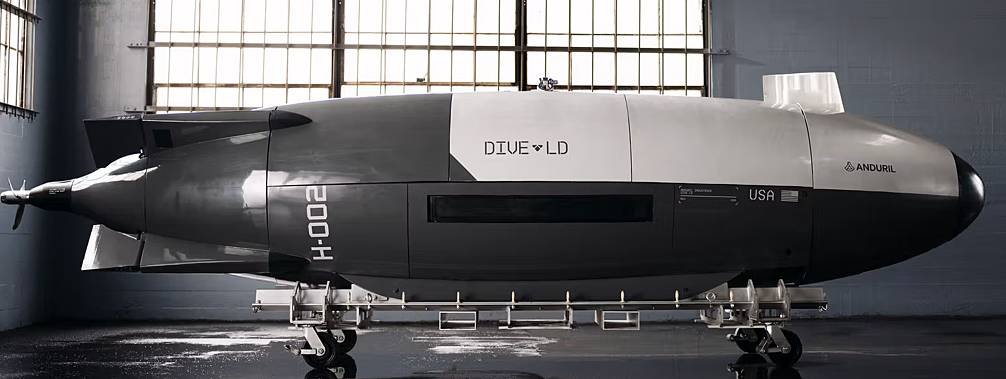
On September 8, 2026, a photograph released on the official Sepah News website of Iran's Islamic Revolutionary Guard Corps (IRGC) showed an unmanned US submarine drone captured by the Guards in the Strait of Hormuz. Washington says the malfunctioning vehicle was an older model surveying regional waters as part of ongoing US operations and it carried no sensitive data or classified equipment- a cover up to avoid the embarrassment.
Iranian state media identified the vessel as the Dive-LD, an autonomous underwater vehicle manufactured by California-based defence technology company Anduril Industries. The IRGC Navy described the submarine as one of the most advanced systems operated by the US military – a "prize" now in Iranian possession.
It can be taken for granted that the IRGC will reverse engineer the captured Dive-LD unmanned underwater vehicle (UUV) to produce its own underwater drone fleet
The 5.8-metre (19-foot) Dive-LD weighs about three tonnes. According to Anduril, it can operate for up to 10 days without requiring it to return to base and can dive to depths of around 6,000 metres (19,700 feet). Its modular design allows it to carry different sensors and payloads. Its stated missions include intelligence, surveillance and reconnaissance, mine countermeasures, seabed mapping and inspection of underwater cables and pipelines.
The US has been investing heavily in autonomous underwater and surface systems to monitor large areas, gather intelligence and track adversary vessels without exposing sailors to danger. The US Navy began receiving Dive-LD systems in 2025, with the vehicles being used by its unmanned undersea units. Anduril is also supplying the Navy with the larger Dive-XL system, which shares design characteristics with Australia's Ghost Shark autonomous submarine. Anduril confirmed that one of its Dive-LD vessels had been lost but played down the military significance of its capture.
Iran's development and acquisition of underwater drone technology involve domestic production and the capture of foreign systems. In September 2026, the IRGC officially inducted domestically produced "smart submarines" (unmanned underwater vehicles) into its naval fleet for the first time. These UUVs are to complement Iran's existing fleet of speedboats and mini-submarines. In March 2022 the IRGC had publicly displayed prototypes of its reconnaissance underwater drones.
Iran has a well-documented track record of successfully copying captured drone technology
It can be taken for granted that the IRGC will reverse engineer the captured Dive-LD unmanned underwater vehicle (UUV) to produce its own underwater drone fleet. Iran has a well-documented track record of successfully copying captured drone technology. For example, after electronically capturing a US RQ-170 Sentinel aerial stealth drone in 2011, Iran reverse-engineered it to build its own highly successful line of 'Shahed' combat and reconnaissance drones.
The first missile strike targeting Osama bin Laden was on August 20, 1998, during US military Operation 'Infinite Reach'. The US Navy fired 75- 80 BGM-109 Tomahawk cruise missiles from warships in the Arabian Sea into al-Qaeda training camps in Khost, Afghanistan. Osama bin Laden evacuated the camp just hours before the strike and escaped unharmed. However, during the attack, at least one Tomahawk cruise missile failed to detonate or went off-course, crashing largely intact in Balochistan province of Pakistan.
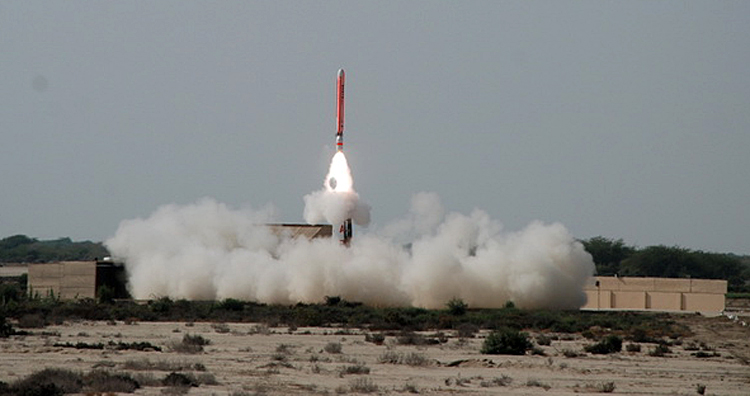
In 2020, former Pakistani Prime Minister Nawaz Sharif publicly confessed that Pakistan reverse-engineered this captured Tomahawk to develop its first indigenous land-attack cruise missile, the Babur-I (Hatf-VII). Intelligence analysts note that the technology also flowed back to Beijing, helping China significantly accelerate its own land-attack cruise missile programmes, culminating in the development of the DH-10 (DongHai-10) cruise missile. In October 2001, intercepted communications from an al-Qaeda operative surfaced via European intelligence saying al-Qaeda had recovered up to several unexploded Tomahawks inside Afghanistan and directly bargained with Beijing, selling them to China for several million dollars. Beijing officially denied these claims at the time but Western intelligence agencies and military analysts maintain that the recovered 1998 Tomahawk technology served as a critical technological leap for both Chinese and Pakistan cruise missile designs.
China has built a vast portion of its modern military arsenal through a highly deliberate strategy of reverse-engineering and replicating foreign defence technologies
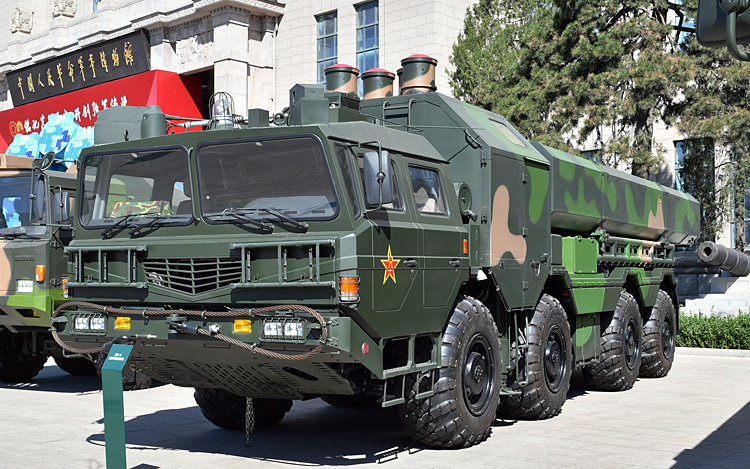
China has built a vast portion of its modern military arsenal through a highly deliberate strategy of reverse-engineering and replicating foreign defence technologies. While its early efforts relied heavily on copying Soviet hardware, Beijing has increasingly targeted advanced US and European hardware obtained through espionage, third-party acquisitions, or battlefield recovery. Prominent examples of defence technologies China has reverse-engineered include: Fighter Jets & Aviation - China's aerospace sector was effectively fast-tracked by cloning Russian (and occasionally Western) airframes.
It has already been covered in these columns earlier that Pierre-Henri Chuet, an active pilot in the French Navy flying from the aircraft carrier Charles de Gaulle, made at least two undeclared trips to China (in September 2018 and August 2019) without informing his superiors. He supposedly shared full details of Rafale fighter jets, including their vulnerabilities and how to down them, which helped Pakistan during Op 'Sindoor'; allegedly downing one Rafale on the first day after which the Rafale fleet was grounded. French authorities naturally deny that Chuet passed on classified details of Rafales to China, as this would affect future sales.
Reverse engineering implies taking a machine apart and copying its shapes; it requires a highly sophisticated industrial backbone to replicate advanced materials, metallurgy, and subcomponents.
Despite the large technological gap vis-à-vis China, India has pursued large-scale reverse engineering of defence technology to bridge the gap. An earlier attempt by the DRDO to reverse engineer the Soviet SA-2 Guideline SAM was eventually cancelled before entering mass production, although tearing down the missile's propulsion, guidance, and airframe provided the foundational knowledge for India's Integrated Guided Missile Development Programme (IGMDP). Building deep capability requires massive financial inputs. As of 2026, India's Gross Expenditure on R&D (GERD) sits at roughly 0.65 per cent of its $3.5T GDP (approximately $23 billion), whereas China invests 2.69 per cent of its massive $18 trillion economy (nearly $480 billion), creating a nearly 20-fold gap in absolute spending.
Reverse engineering implies taking a machine apart and copying its shapes; it requires a highly sophisticated industrial backbone to replicate advanced materials, metallurgy, and subcomponents. China has done it successfully and India can very well do it also, since there is no morality in politics and war. Politics in India are dirty to say the least with no compunctions about criminality in politics. But following the moral path of developing technology with foreign collaboration is considered more lucrative – readers can guess why.