




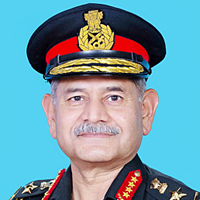
The insightful articles, inspiring narrations and analytical perspectives presented by the Editorial Team, establish an alluring connect with the reader. My compliments and best wishes to SP Guide Publications.
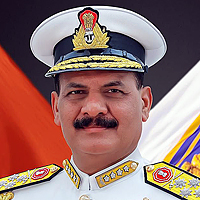
"Over the past 60 years, the growth of SP Guide Publications has mirrored the rising stature of Indian Navy. Its well-researched and informative magazines on Defence and Aerospace sector have served to shape an educated opinion of our military personnel, policy makers and the public alike. I wish SP's Publication team continued success, fair winds and following seas in all future endeavour!"

Since, its inception in 1964, SP Guide Publications has consistently demonstrated commitment to high-quality journalism in the aerospace and defence sectors, earning a well-deserved reputation as Asia's largest media house in this domain. I wish SP Guide Publications continued success in its pursuit of excellence.
Russian Deputy Prime Minister Marat Khusnullin proposed exploring a direct railway link to the Indian Ocean (via Turkmenistan, Iran, Afghanistan, and Pakistan) to mitigate severe vulnerabilities and trade disruptions at key maritime chokepoints
 |
The Author is Former Director General of Information Systems and A Special Forces Veteran, Indian Army |
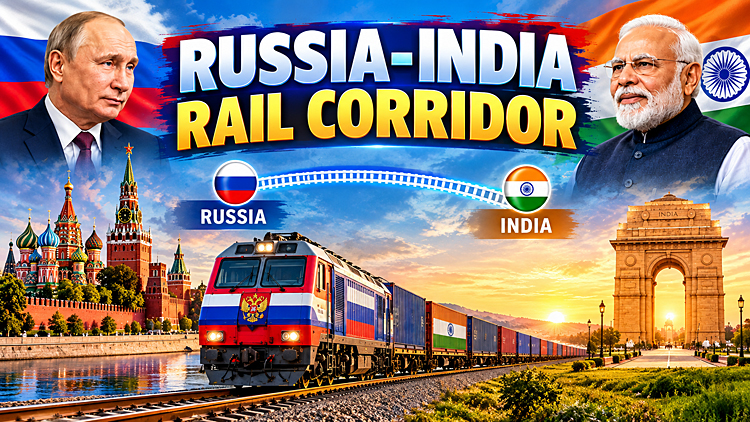
Russia has floated an ambitious idea of establishing a direct railway link to the Indian Ocean, according to news reports of August 10, 2026. Russia's Deputy Prime Minister Marat Khusnullin has emphasised that such a project should be explored to mitigate risks associated with maritime chokepoints; with the Bosphorus and the Strait of Hormuz presenting significant vulnerabilities for global trade, alternative overland corridors could provide more secure connectivity. He highlighted that routes passing through Turkmenistan, Iran, Afghanistan, and Pakistan as possible alignments, with any option that ensures access to India considered viable.
The strategic urgency for alternative land routes follows joint US-Israel military strikes on Iran and Iran's subsequent retaliatory strikes and shipping blockades in the Strait of Hormuz
Beyond international connectivity, Khusnullin also addressed Russia's domestic economic priorities. He stressed that the construction sector requires consistent, long-term financial support to sustain growth. According to him, the industry already has the capacity to absorb an additional one trillion roubles annually. If such funding is secured over the next five years, Russia could expand its construction capacity significantly, enabling the development of large-scale infrastructure projects such as the proposed Eurasian rail link.
The Russian proposal comes at a time of heightened maritime instability in the Strait of Hormuz; with armed hostilities involving the US, Israel, and Iran have disrupted shipping lanes, prompting Tehran to impose a blockade on vessels linked to its adversaries. On February 28, 2026, joint US-Israel military strikes were carried out against Iran, targeting major urban centres including Tehran. In retaliation, Iran's Islamic Revolutionary Guard Corps launched missile and drone attacks against Israeli positions and US bases across Bahrain, Jordan, Iraq, Qatar, Kuwait, the UAE, and Saudi Arabia.
The Strait of Hormuz is one of the world's most critical energy arteries, handling about a quarter of global oil trade and nearly a fifth of liquefied natural gas shipments. The blockade has amplified concerns over supply chain resilience and accelerated discussions on alternative transport corridors. These developments have intensified the urgency for countries like Russia to diversify trade routes away from contested maritime zones. A rail corridor to India would not only bypass the Strait of Hormuz but also reduce reliance on the Bosphorus, another strategic bottleneck.
For India, such a link could enhance access to energy supplies and trade networks while reducing exposure to maritime disruptions. For Russia, it would reinforce its pivot to Asia and deepen economic ties with South Asia. The idea underscores the growing importance of resilient logistics in an era of geopolitical volatility. As maritime chokepoints face increasing risks, overland connectivity projects are gaining traction as strategic alternatives. The concept of a Russia–India railway corridor aligns with broader efforts to strengthen Eurasian integration. It would complement existing initiatives like the International North-South Transport Corridor (INSTC) and Russia's push to expand the Northern Sea Route.
Estimated to require $35 billion to $50 billion and a 10-to-15-year timeline, the conceptual corridor faces immense engineering obstacles, including building through high-mountain terrain and reconciling three distinct track gauges across regions
Russia maintains a complex, pragmatic balancing act in the Af-Pak region. Moscow has established a formal partnership with the Taliban while simultaneously treating Pakistan as a vital regional security partner. Russia was the first country to formally recognise the Taliban regime in July 2025. In May 2026, Russia and Taliban signed a formal military-technical cooperation pact. Bilateral trade was over $530 million in 2025, with Russia exporting energy, oil, gas, and wheat to Afghanistan. Russia has offered itself as a mediator between the Taliban and Pakistan.
Moscow views Pakistan a critical partner for maintaining regional stability and counterterrorism efforts across South and Central Asia. Both nations share long-term interests in opening transport and connectivity corridors linking Central Asian economies through Afghanistan and Pakistan to the Indian Ocean. Moscow has clarified the Russia-Taliban military-technical agreement doesn't involve advanced/offensive technology and will not restrict Pakistan's security operations. Russia has offered to formally mediate border disputes between Pakistan and the Taliban to prevent regional escalation. Bilateral Russia-Pakistan trade was about $1.3 billion in 2025; 13 per cent increase over the previous year.
China imports 1.38 million to 1.4 million barrels per day (bpd) of Iranian oil; amounting for about 80 per cent of Iran's total oil exports. Majority of this volume is transported by shadow fleet tankers. But the China-Iran 10,400-km railway corridor was inaugurated in May 2025; connecting China's manufacturing-logistic hubs of Xi'an and Yiwu directly to Tehran's Aprin Dry Port – reducing 30-40 days sea transit to just 12-15 days.
The primary barrier to a continuous Russia-India land rail link remains the deep geopolitical hostility and severed rail connection between Pakistan and India, alongside security risks in Afghanistan and delicate regional diplomatic balancing
Presently, the foundation for Russia-India transit is the 7,200-km INSTC multi-mode network mixing ship, rail, and road; Russia and Iran have already spent over $20 billion developing this and Russia has also extended $3 billion credit line specifically to bridge railway gaps within Iran. Russia's new proposal of a direct land-based Russia-India rail corridor is more of an exploratory concept rather than an officially financed, active construction project.
Because the direct overland line is in its infancy, no unified official price tag has been finalised. However, independent transport infrastructure assessments put the structural requirements in perspective. However, experts project that laying thousands of km of new heavy freight tracks, integrating broad and standard track gauges, and building tunnels through the mountainous terrain of Afghanistan and Pakistan will require a minimum investment of $35 billion to $50 billion; requiring a multi-nation consortium including Russian capital, Chinese backing, and regional infrastructure fund. If the involved nations move from political rhetoric to treaty signatures, the timeline is projected to stretch over at least 10-15 years, heavily constrained by the following realities:
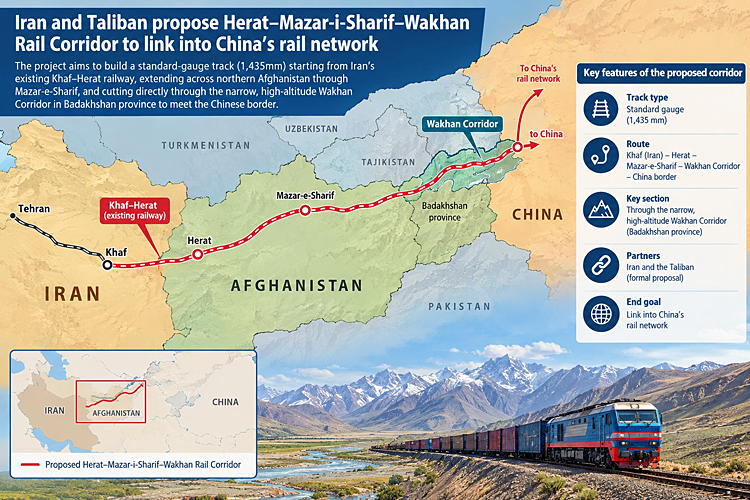
The proposal exists alongside alternative concepts such as the proposed corridor linking Iran and Afghanistan directly to China, which remains constrained by high-altitude engineering challenges and Beijing's security concerns
Interestingly. Iran and Taliban have formally proposed the 'Herat–Mazar-i-Sharif–Wakhan' Rail Corridor to link into China's rail network, but whether this ambitious railway plan materialises will depend on political will, financial investment, and regional stability, but its potential impact on Eurasian trade architecture is undeniable. The project aims to build a standard-gauge track (1,435mm) starting from Iran's existing Khaf–Herat railway, extending across northern Afghanistan through Mazar-e-Sharif, and cutting directly through the narrow, high-altitude Wakhan Corridor in Badakhshan province to meet the Chinese border. The alignment would bypass transit bottlenecks caused by switching track gauges at the Kazakhstan and Turkmenistan borders, cutting cargo transit distances to China by up to 50 per cent. As of now, Beijing is highly cautious because it views the Wakhan Corridor through a strict national security lens rather than an economic one – a buffer zone bordering China's sensitive Xinjiang region. Besides, laying heavy freight railway tracks through Wakhan Corridor's glaciated, unadulterated wilderness would require an astronomically expensive network of tunnels and bridges through the 350 km-long high-altitude mountain valley reaching elevations close to 5,000 meters above sea level.
Finally, the India-Pakistan clash is the ultimate geopolitical roadblock that makes a direct, continuous Russia-India land railway virtually impossible to build. The final link, connecting Pakistan's railway network directly into India's, remains severed by decades of military tensions, frozen diplomacy, and systemic border closures.