




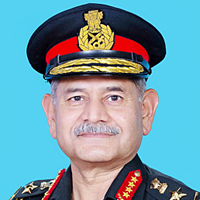
The insightful articles, inspiring narrations and analytical perspectives presented by the Editorial Team, establish an alluring connect with the reader. My compliments and best wishes to SP Guide Publications.
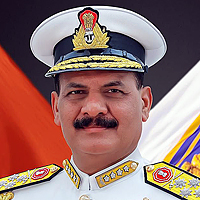
"Over the past 60 years, the growth of SP Guide Publications has mirrored the rising stature of Indian Navy. Its well-researched and informative magazines on Defence and Aerospace sector have served to shape an educated opinion of our military personnel, policy makers and the public alike. I wish SP's Publication team continued success, fair winds and following seas in all future endeavour!"

Since, its inception in 1964, SP Guide Publications has consistently demonstrated commitment to high-quality journalism in the aerospace and defence sectors, earning a well-deserved reputation as Asia's largest media house in this domain. I wish SP Guide Publications continued success in its pursuit of excellence.
The Rashtriya Swatantra Party's (RSP) breakthrough signals a profound churn in Nepali politics, as voters rejected traditional loyalties in favour of transparency, accountability, and a fresh leadership
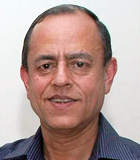 |
The Author is Former Director General of Information Systems and A Special Forces Veteran, Indian Army |
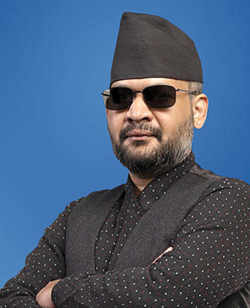
Nepal's Gen Z-inspired Rashtriya Swatantra Party (RSP) winning the recent general elections has routed the two communist parties. Some analysts view this a major setback for China; Beijing having worked to stitch together 'communist unity' to secure a stable, pro-Beijing government in Kathmandu. With both the communist parties reduced to minor players, it is opined that China finds its preferred communist channels of influence abruptly stranded? The elections also showed that Nepalese women had broken the glass ceiling in electoral politics; 13 of the 16 women fielded by the RSP won by huge margins.
But China plans decades ahead and economic clout is a major factor in geopolitics. China is the largest Foreign Direct Investor (FDI) in Nepal, primarily driving infrastructure, energy, and manufacturing projects through the Belt and Road Initiative (BRI). Major investments focus on hydropower, cement plants, and connectivity projects. In FY2024-2025, China accounted for 44.77 per cent of total FDI in Nepal. As of early 2026, China continues to step up investment in Nepal's hydropower sector. At the Asian Financial Forum on January 28, 2026, Bindeswar Prasad Lekhak, Nepal's Consul General in Hong Kong, said, "China is the biggest investor in Nepal, so I think China will support us more and more in the future."
China is the largest Foreign Direct Investor (FDI) in Nepal, primarily driving infrastructure, energy, and manufacturing projects through the Belt and Road Initiative (BRI).
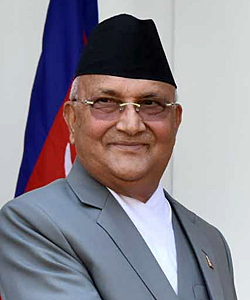
We must also acknowledge the role of the CIA and ISI in the Gen Z uprising in Nepal. 'Hami Nepal', a popular NGO, run by Sudan Gurung, is funded and controlled by Barbara Foundation (run by Leftist Sanduk Ruit and lawyer Mohna Ansari) defending radical Islamists. The CIA controlled digital media and NGO's in Nepal used hashtags like #PoliticiansNepoBabyNepal, #NepoKids, and #NepoBaby on social media inciting the revolt, as well as anti-India toolkit with hashtags like #BackoffIndia and #GoBackIndia running since India's prolonged blockade of the India-Nepal border during 2015-2016 that pushed Nepal into China's lap. Nepalese social media is divided over India's approach towards Nepal. 1/5th Nepalese (aged 15-24) unemployed and per capita GDP of $1,447, according to the World Bank, makes the task easy for the CIA-ISI.
After former Pakistani Lt Col Mohammad Habib went missing in Nepal (2017) and Pakistan's Prime Minister S.K. Abbasi's Nepal visit in 2018, organisations in Nepal like Tehfuzul Madrasa became safe houses for use by ISI and LeT to target India. Nepal provided protection to ISI-backed terrorists and was becoming an 'ISI Control Centre' according to the Intelligence Bureau. Muslim population is 5.10 per cent of Nepal's approximately 30.6 million population as of early 2025; the majority of whom live in the Terai region. The news that the Taliban plan to transit through India to interact with Muslims in Nepal must be treated with caution.
Nepal's updated official map, adopted in 2020 and featured on new ₹100 currency notes as of 2025, includes three key areas in Uttarakhand, India.
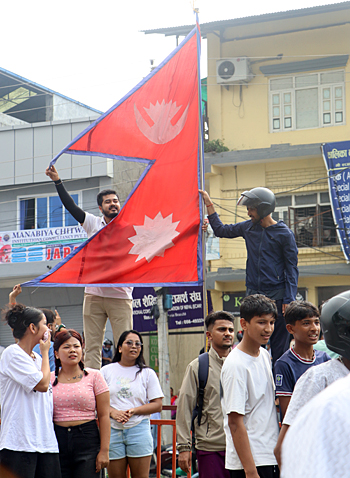
It is significant to note that Nepal's Prime Minister, rapper Balendra Shah or Balen Shah is a Gen Z idol. In 2023, he urged a ban on Indian movies in Nepal alleging a Bollywood movie showed goddess Sita as Indian though she was born in Nepal to King Janak. He also said Bollywood movies show Pakistan as a violent terrorist country, which should be opposed. As the Mayor of Kathmandu in the same year, he displayed a map in his office of "Greater Nepal", showing parts of Indian territories of Uttarakhand, Sikkim and Himachal Pradesh a part of Nepal. Nepal's updated official map, adopted in 2020 and featured on new ₹100 currency notes as of 2025, includes three key areas in Uttarakhand, India (Kalapani, Lipulekh, and Limpiyadhura) as part of its territory. These claimed regions cover roughly 300 sq km and are formally claimed by Nepal, which India strongly rejects as a unilateral, artificial expansion. Nepalese currency is being minted by a Chinese firm.
The RSP's breakthrough signals a profound churn in Nepali politics, as voters rejected traditional loyalties in favour of transparency, accountability, and a fresh leadership. The party has positioned itself as a credible alternative, promising transparency, technocratic governance, and a break from the patronage-driven political culture that has dominated the country since the restoration of democracy. Only time will show what is the actual stand of the RSP and Balen Shah towards India, China and Pakistan. Gen Z has certainly not forgotten the ill-conceived border blockade of Nepal in 2015. India's stoppage of regular recruitment in the Army has also added to Nepal's unemployment woes, as three Gorkha Regiments of the Indian Army had Nepalese manpower, and Nepal is not interested in short-term recruitment under the Agnipath scheme.
For India, sharing a thousand-mile open border with Nepal permitting free movement of people, the situation may not be very healthy.
China will continue to increase its influence in Nepal and the region. For India, sharing a thousand-mile open border with Nepal permitting free movement of people, the situation may not be very healthy. The coup in Nepal came as a surprise to India and Indian intelligence agencies, just like the coups in Sri Lanka and Bangladesh. Moreover, China is planning a new SAARC that would also include Afghanistan. Finally, it is more than evident that the US wants to destabilise South Asia to check Chinese influence, including in Balochistan and Myanmar, as possible. But more importantly, it wants India boxed in from all directions to make it more compliant. The coups in Sri Lanka, Bangladesh and Nepal indicate this, including calls from Bangladesh and Nepal claiming parts of Indian territory. China views India in the US camp, despite the India-US trade row and knowing eventually it would get sorted out.