





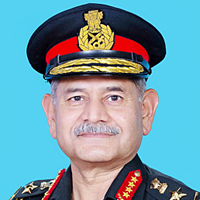
The insightful articles, inspiring narrations and analytical perspectives presented by the Editorial Team, establish an alluring connect with the reader. My compliments and best wishes to SP Guide Publications.
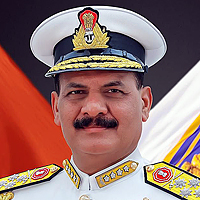
"Over the past 60 years, the growth of SP Guide Publications has mirrored the rising stature of Indian Navy. Its well-researched and informative magazines on Defence and Aerospace sector have served to shape an educated opinion of our military personnel, policy makers and the public alike. I wish SP's Publication team continued success, fair winds and following seas in all future endeavour!"

Since, its inception in 1964, SP Guide Publications has consistently demonstrated commitment to high-quality journalism in the aerospace and defence sectors, earning a well-deserved reputation as Asia's largest media house in this domain. I wish SP Guide Publications continued success in its pursuit of excellence.
India's 2026 chairship provides an opportunity to make the transition from political declarations to a practical platform for trade of goods & services, and development of technologies

India's hosting of the 18th BRICS Summit in New Delhi on September 12-13 comes at a defining moment for the global economy and the international order.
Two decades after the grouping emerged as a platform for major emerging economies, BRICS has evolved into a much broader coalition of the Global South. For India, the summit is not merely a diplomatic gathering; it is an opportunity to shape a more representative, resilient and economically connected global order.
Two decades after the grouping emerged as a platform for major emerging economies, BRICS has evolved into a much broader coalition of the Global South
The central question is whether BRICS can move beyond political declarations and build mechanisms that deliver tangible economic benefits. India's 2026 chairship provides an opportunity to make that transition-- a practical platform for trade, finance, energy and technology.
The economic weight of BRICS is already substantial. The expanded grouping accounts for roughly 40 per cent of global GDP on a purchasing-power-parity basis, nearly half of the world's population and around a quarter of global trade. Its members also represent a formidable share of global energy and mineral resources.
However, the most striking feature of BRICS is not what it has already achieved, but what remains untapped.
Intra-BRICS merchandise trade reached around $1.17 trillion in 2024, compared with just $84 billion in 2003. That represents more than a thirteen-fold increase over two decades.
But despite this impressive growth, trade among BRICS members remains far below its potential. Intra-BRICS trade accounts for only about a fifth of South-South trade, even though BRICS economies represent more than two-thirds of Global South GDP.
The objective should now be to take intra-BRICS trade towards $2 trillion and beyond over the coming years
This creates an enormous opportunity. The objective should now be to take intra-BRICS trade towards $2 trillion and beyond over the coming years–not through protectionism, but by reducing transaction costs, improving logistics, harmonising standards, expanding trade finance and making cross-border payments easier.

One of the most consequential areas for BRICS is international payments.
However, a single BRICS currency remains economically and politically unrealistic given the enormous differences among member economies, monetary systems and exchange-rate regimes. A more practical approach is to build an intra-BRICS local-currency settlement mechanism.
A single BRICS currency remains economically and politically unrealistic given the enormous differences among member economies
An Indian company importing from Brazil, Russia, the UAE, Indonesia, or another BRICS member should increasingly have the option to settle transactions in mutually agreed national currencies rather than routing every transaction through the US dollar.
A future BRICS payment architecture could combine local-currency settlement, interoperable digital payment systems, central-bank interoperability, and trade-finance platforms.
India's experience with UPI and digital public infrastructure allows New Delhi to play a leading role in developing such an ecosystem.
For India, BRICS should not be viewed simply as a market for commodities and manufactured goods. The bigger opportunity lies in services and technology.
For India, BRICS should not be viewed simply as a market for commodities and manufactured goods. The bigger opportunity lies in services and technology
India's merchandise exports to BRICS partners were estimated at around $82 billion in FY2025-26, while its services exports to BRICS countries were about $31.3 billion in 2024. This can expand substantially!
Opportunities in BRICS lie in Indian IT and software companies, fintech firms, pharmaceutical companies, healthcare providers, and digital-platform businesses.
Energy is another area where BRICS possesses extraordinary potential. The expanded grouping brings together major energy producers and consumers. Russia and West Asian members are major oil and gas suppliers, while India and China are among the world's largest energy consumers. Brazil is a significant oil and biofuel producer, while several BRICS economies are investing heavily in renewable energy.
This creates the basis for a comprehensive BRICS Energy Partnership. It could cover long-term oil and gas supplies, nuclear energy, renewable energy and green hydrogen
This creates the basis for a comprehensive BRICS Energy Partnership. It could cover long-term oil and gas supplies, nuclear energy, renewable energy and green hydrogen.
BRICS has already begun moving in this direction. Recently, BRICS Energy Ministers have endorsed cooperation in smart grids and energy storage, including a BRICS Digital Centre of Excellence for Smart Grids and Energy Storage.

The New Development Bank has become another important element of BRICS economic cooperation. The bank has approved over $42 billion in total financing for more than 130 projects globally.
The bank is increasingly financing projects that connect BRICS economies through infrastructure, renewable energy, ports, railways, logistics networks and digital systems.
The New Development Bank has become another important element of BRICS economic cooperation
For the wider Global South, this would create an additional source of development finance at a time when infrastructure and climate finance are growing rapidly.
There is, however, a major issue India cannot ignore. Greater BRICS trade does not automatically mean greater economic benefit for India. India's trade deficit with BRICS has risen sharply. Recent estimates put India's BRICS trade deficit at around $226 billion in FY2025-26, compared with about $74.5 billion in FY2021. So, India's objective should not simply be more BRICS trade, but more balanced BRICS trade.
The success of India's BRICS presidency should ultimately be measured by how effectively Indian businesses gain access to these markets
The success of India's BRICS presidency should ultimately be measured by how effectively Indian businesses gain access to these markets.
Crucially, the broader strategic significance of BRICS lies in its potential to give the Global South greater economic and diplomatic agency.
As emphasised by India, BRICS is not to be seen as an anti-Western alliance. The real objective should be to provide developing economies with greater choices in trade, finance, technology, energy and international payments.
The world is already moving towards greater economic fragmentation. There are visible signs of supply-chain disruptions, geopolitical conflicts, sanctions and financial volatility.
In this environment, BRICS can become a platform for resilience. Its members can trade more with each other, finance more projects together, settle more transactions in their own currencies, and develop technologies jointly.
New Delhi can play its role in transforming BRICS from a forum that speaks for the Global South into a platform that delivers for the Global South. That would be a far more consequential legacy than another summit declaration.
Manish Kumar Jha is a Consulting & Contributing Editor for SP's Aviation, SP's Land Forces and SP's Naval Forces and a security expert. He writes on national security, military technology, strategic affairs & policies.