






The insightful articles, inspiring narrations and analytical perspectives presented by the Editorial Team, establish an alluring connect with the reader. My compliments and best wishes to SP Guide Publications.

"Over the past 60 years, the growth of SP Guide Publications has mirrored the rising stature of Indian Navy. Its well-researched and informative magazines on Defence and Aerospace sector have served to shape an educated opinion of our military personnel, policy makers and the public alike. I wish SP's Publication team continued success, fair winds and following seas in all future endeavour!"

Since, its inception in 1964, SP Guide Publications has consistently demonstrated commitment to high-quality journalism in the aerospace and defence sectors, earning a well-deserved reputation as Asia's largest media house in this domain. I wish SP Guide Publications continued success in its pursuit of excellence.
Javelin anti-tank guided missile has acquired reputation as a battle-tested portable anti-armour weapon system against heavily protected vehicles
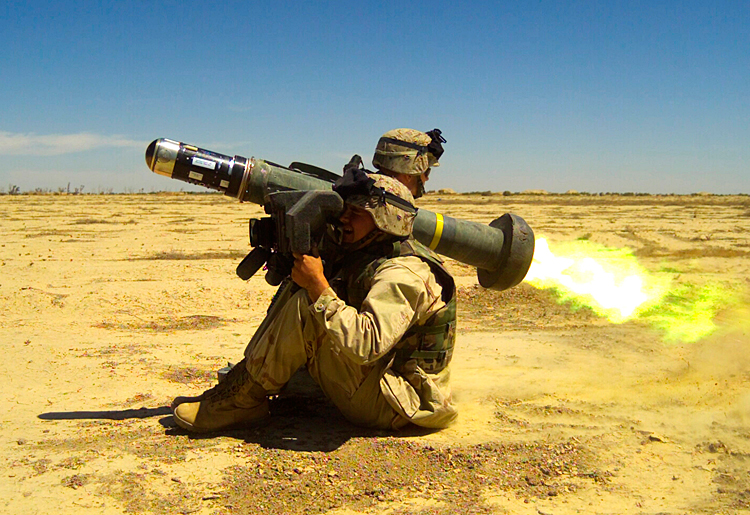
India's decision to acquire the US-made Javelin anti-tank missile system marks another significant step in the deepening defence partnership between New Delhi and Washington, while also addressing the Indian Army's requirement for a highly mobile, precision anti-armour weapon.
US Ambassador to India Sergio Gor recently announced that India has signed an agreement to procure the Javelin system through the US Foreign Military Sales (FMS) route. He said the agreement could also open the door to future co-production opportunities, signalling that the deal could evolve beyond a straightforward import arrangement.
The FGM-148 Javelin is a man-portable, medium-range anti-tank guided missile developed and produced by the Javelin Joint Venture of Lockheed Martin and RTX. It is designed primarily for infantry use against armoured vehicles and can be employed in both top-attack and direct-attack modes.
One of the system's defining features is its "fire-and-forget" capability. Once the missile is locked onto its target and launched, its guidance system allows it to track the target without requiring the operator to continuously guide the missile. This enables the soldier to immediately move, take cover or reposition rather than remain exposed to enemy counter-fire.
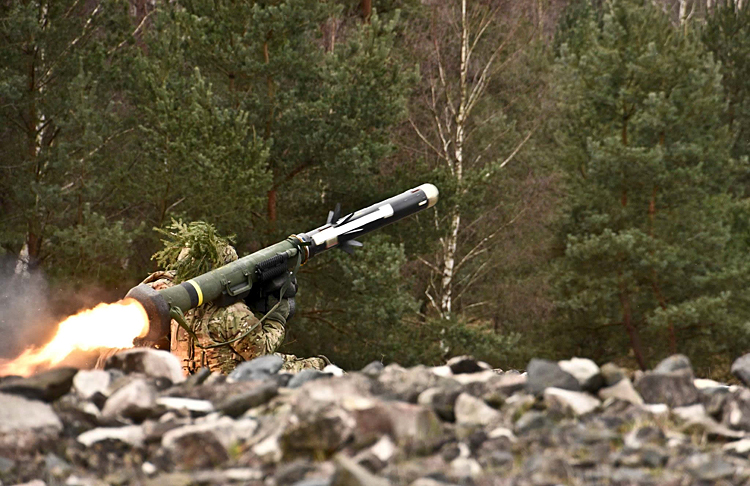
The weapon has also acquired a reputation as a battle-tested system through extensive use by the US and allied forces. Its combat employment in recent conflicts, particularly in Ukraine, has further highlighted the utility of portable anti-armour weapons against heavily protected vehicles.
The Javelin is therefore not simply another anti-tank missile for the Indian Army. Its combination of portability, autonomous guidance and precision engagement gives infantry units greater flexibility in dealing with armoured threats.
The latest announcement follows a US State Department approval in November 2025 for a potential Foreign Military Sale to India worth approximately $92.8 million, comprising Javelin systems and Excalibur precision-guided artillery ammunition.
According to the US Defence Security Cooperation Agency (DSCA), the proposed Javelin component was valued at $45.7 million and included up to 100 FGM-148 Javelin missiles, 25 Lightweight Command Launch Units (LwCLUs) and associated equipment, logistics and programme support. The wider package also covered 216 M982A1 Excalibur 155mm projectiles, valued at about $47.1 million.
It is important to distinguish between the November 2025 US approval of a potential sale and the 2026 procurement agreement announced by the US Embassy. A DSCA notification represents approval for a possible FMS transaction; the subsequent Letter of Offer and Acceptance is a further step toward an actual procurement. The US Embassy has now said the Indian Army has signed the LOA for the Javelin system.
India's interest in the Javelin is not new. The Indian Army has for years sought a modern third-generation anti-tank guided missile to supplement and eventually replace ageing systems such as the Milan and Konkurs.
The Javelin had previously been considered by India, but procurement did not move forward. The Army's requirement has become more pressing as modern battlefields have demonstrated the importance of infantry-carried precision weapons capable of engaging tanks and other armoured platforms from protected positions.
The latest procurement also comes in the aftermath of Operation Sindoor, which has accelerated India's efforts to replenish stocks and strengthen specialised military capabilities.
The November 2025 US package itself included Excalibur ammunition that India had already used with its M777 ultra-light howitzers. The Javelin acquisition, meanwhile, addresses a different requirement—providing infantry units with a highly portable anti-armour capability.
Recent reporting indicates that India's decision to procure Javelin launch units was taken after Operation Sindoor, with the Army seeking an immediate capability enhancement.
Perhaps more significant than the immediate purchase is Ambassador Gor's reference to co-production.
India has increasingly sought to move its defence relationship with the United States from a buyer-seller model towards joint manufacturing, technology partnerships, and integration into global defence supply chains. The Javelin could potentially become another test case for this approach.
For New Delhi, local production would have advantages beyond reducing dependence on imports. It could provide greater control over inventories, maintenance and replenishment while potentially integrating Indian companies into the Javelin's global supply chain.
However, the extent of technology transfer and the nature of any future Indian manufacturing arrangement will be crucial. A co-production agreement is not automatically equivalent to complete transfer of design or seeker technology. India will need to ensure that any industrial arrangement provides meaningful manufacturing capability and long-term sustainment benefits.
The Javelin's significance lies in the tactical flexibility it provides to infantry formations.
A soldier can carry the launcher and missile system, acquire the target, fire and rapidly relocate. The missile's autonomous guidance reduces the operator's exposure after launch. For infantry operating in difficult terrain, including mountainous areas and semi-urban environments, such a capability can be particularly valuable.
The system's portability also allows anti-armour teams to be dispersed rather than concentrated around larger vehicle-mounted systems. This can complicate an adversary's targeting process and provide commanders with more options at the tactical level.
If the acquisition ultimately leads to meaningful co-production in India, the Javelin could become more than an imported anti-tank weapon. It could become another building block in India's effort to create a deeper US-India defence industrial partnership—one that combines American technology with Indian manufacturing and production capacity.
For the Indian Army, meanwhile, the immediate priority is straightforward: acquiring a proven fire-and-forget, man-portable anti-armour capability that can give infantry greater confidence and lethality on a battlefield increasingly dominated by precision weapons, drones and heavily protected armoured platforms.
Manish Kumar Jha is a Consulting & Contributing Editor for SP's Aviation, SP's Land Forces and SP's Naval Forces and a security expert. He writes on national security, military technology, strategic affairs & policies.