




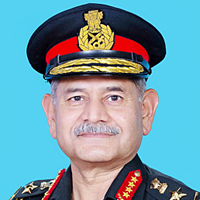
The insightful articles, inspiring narrations and analytical perspectives presented by the Editorial Team, establish an alluring connect with the reader. My compliments and best wishes to SP Guide Publications.
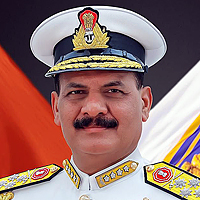
"Over the past 60 years, the growth of SP Guide Publications has mirrored the rising stature of Indian Navy. Its well-researched and informative magazines on Defence and Aerospace sector have served to shape an educated opinion of our military personnel, policy makers and the public alike. I wish SP's Publication team continued success, fair winds and following seas in all future endeavour!"

Since, its inception in 1964, SP Guide Publications has consistently demonstrated commitment to high-quality journalism in the aerospace and defence sectors, earning a well-deserved reputation as Asia's largest media house in this domain. I wish SP Guide Publications continued success in its pursuit of excellence.
Modi's visit to Isreal signals that the relationship is entering a new phase – marked not only by arms deals but by joint research, emerging technologies and a shared interest in regional stability
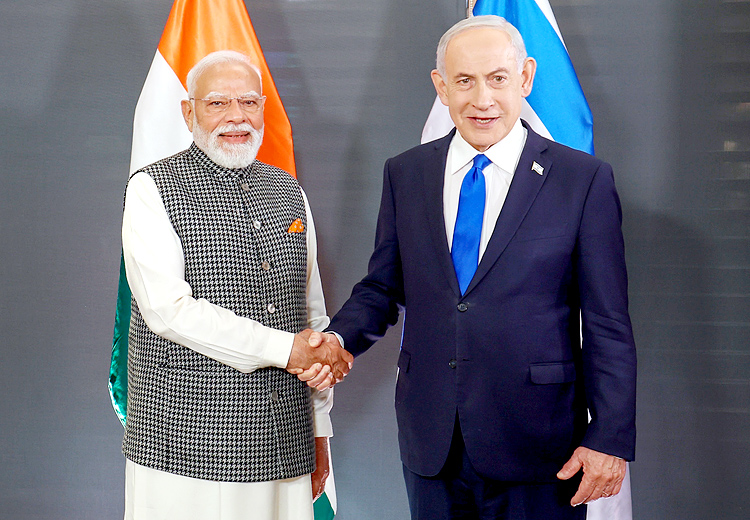
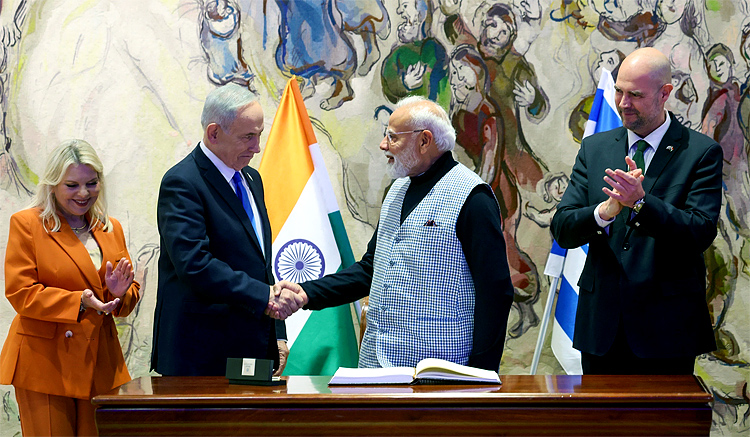
"You are a great friend of Israel and a great leader on the world stage... Narendra, you are more than a friend – you are a brother." – Israeli Prime Minister Netanyahu welcomed Prime Minister Modi and described the personal bond between the two leaders. The statement marks the importance attached to the visit of Prime Minister Modi to Israel.
Prime Minister Narendra Modi began a high-profile visit to Israel this week, holding extensive talks with Israeli Prime Minister Benjamin Netanyahu that signal a further deepening of the India–Israel strategic partnership.
Defence cooperation is set to dominate the agenda, with discussions focusing on Israel's multi-layered missile defence architecture
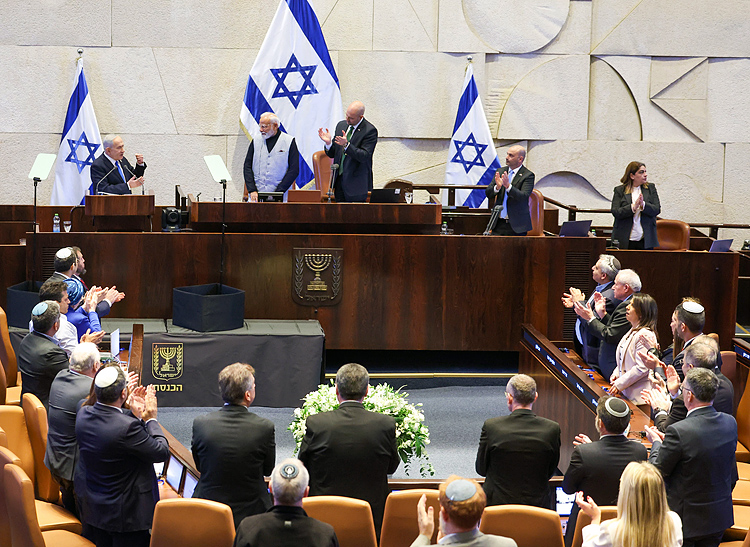
Prime Minister Modi responded in same fervour in his Knesset Speech, "No cause can justify the murder of civilians. Nothing can justify terrorism." – Underlining India's firm and consistent stance against terrorism without double standards.
The visit, marked by ceremonial welcomes and closed-door security briefings, is expected to elevate cooperation across defence, technology, agriculture and trade, while also carrying broader implications for West Asia's evolving geopolitical balance.
Defence cooperation is set to dominate the agenda, with discussions focusing on Israel's multi-layered missile defence architecture – widely regarded as among the most sophisticated in the world.
Officials indicated that India is closely studying several advanced systems like the Arrow Missile Defence System developed by Israel Aerospace Industries – designed to intercept long-range ballistic missiles outside the atmosphere.
India is closely studying several advanced systems like the Arrow Missile Defence System
Israel is also supposed to offer its ace--David's Sling, built by Rafael Advanced Defense Systems, capable of countering medium-range missiles and drones at distances of up to 300 km.
Additionally, the famed Iron Dome and Iron Beam, could be part of the defence talks which is also developed by Rafael, which has proven effective against short-range rockets between 4 and 70 km and has been battle-tested in multiple conflicts. However, no official words are on these aspects.
Iron Beam is a next-generation 100-kilowatt laser weapon jointly developed by Rafael and Elbit Systems, designed to neutralise aerial threats such as rockets, drones and mortars within a range of up to 10 km.
Indian defence planners view these systems as potentially complementary to India's existing missile shield, especially amid growing concerns over drone warfare and evolving aerial threats along its borders.
The famed Iron Dome and Iron Beam, could be part of the defence talks
Strategic analysts note that laser-based systems like Iron Beam could represent a cost-effective solution for countering swarm drone attacks – an area of increasing importance in modern conflict.
India and Israel have steadily expanded defence ties over the past two decades, with Israel emerging as one of India's top arms suppliers. Beyond procurement, both nations are increasingly focused on joint development and technology transfer under India's 'Make in India' initiative.
India and Israel have steadily expanded defence ties over the past two decades, with Israel emerging as one of India's top arms suppliers
The visit also comes at a time of regional flux in West Asia. With shifting alignments and ongoing security tensions, closer India–Israel coordination reflects New Delhi's broader strategy of balancing relations across the Middle East – maintaining ties with Israel while continuing strong engagement with Arab nations and Iran.
Diplomatic observers say Modi's visit underscores India's intent to act as a pragmatic power – driven by national security and technological advancement rather than ideological positioning.
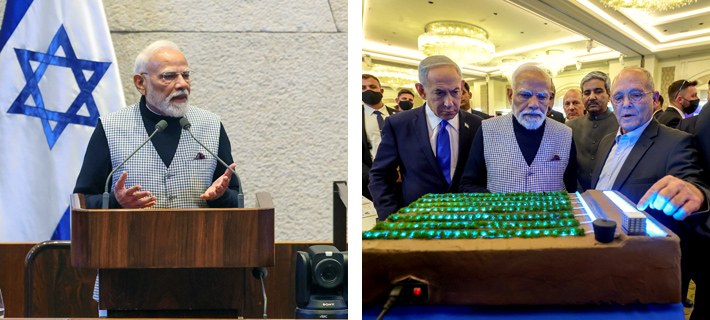
Beyond defence, economic cooperation is high on the agenda. Bilateral trade between India and Israel spans diamonds, agriculture technology, cybersecurity, water management and artificial intelligence.
Closer India–Israel coordination reflects New Delhi's broader strategy of balancing relations across the Middle East
Israeli expertise in desert agriculture and water conservation remains particularly relevant for India's climate-vulnerable regions. Talks are expected to explore expanded partnerships in agri-tech, clean energy and start-up ecosystems.
Industry leaders accompanying the delegation are also eyeing collaboration in semiconductor research and critical technologies, areas seen as vital for supply chain resilience.
The visit is being closely watched across the region. India has strengthened ties not only with Israel but also with Gulf nations in recent years, positioning itself as a key economic and diplomatic partner across competing blocs.
Analysts suggest that deeper India–Israel defence cooperation could alter regional calculations, particularly if advanced missile defence or directed-energy technologies become part of India's arsenal.
The visit is being closely watched across the region. India has strengthened ties not only with Israel but also with Gulf nations in recent years
What began decades ago as discreet security cooperation has evolved into a broad-based strategic partnership. Modi's visit signals that the relationship is entering a new phase – marked not only by arms deals but by joint research, emerging technologies and a shared interest in regional stability.
As discussions continue in Tel Aviv and Jerusalem, the outcomes could shape not just bilateral ties, but also the strategic architecture of a rapidly changing West Asian landscape.
Manish Kumar Jha is a Consulting & Contributing Editor for SP's Aviation, SP's Land Forces and SP's Naval Forces and a security expert. He writes on national security, military technology, strategic affairs & policies.