




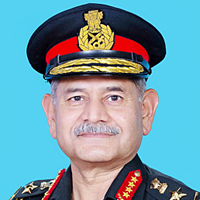
The insightful articles, inspiring narrations and analytical perspectives presented by the Editorial Team, establish an alluring connect with the reader. My compliments and best wishes to SP Guide Publications.
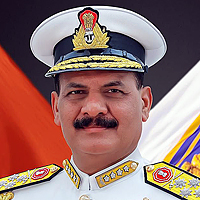
"Over the past 60 years, the growth of SP Guide Publications has mirrored the rising stature of Indian Navy. Its well-researched and informative magazines on Defence and Aerospace sector have served to shape an educated opinion of our military personnel, policy makers and the public alike. I wish SP's Publication team continued success, fair winds and following seas in all future endeavour!"

Since, its inception in 1964, SP Guide Publications has consistently demonstrated commitment to high-quality journalism in the aerospace and defence sectors, earning a well-deserved reputation as Asia's largest media house in this domain. I wish SP Guide Publications continued success in its pursuit of excellence.
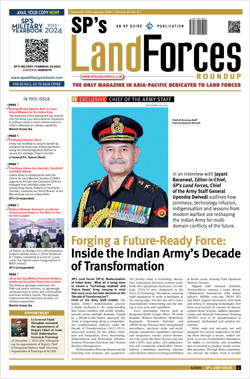
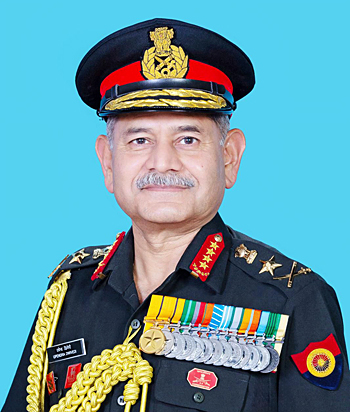
In an interview with Jayant Baranwal, Editor-in-Chief, SP's Land Forces, Chief of the Army Staff General Upendra Dwivedi outlines how jointness, technology infusion, indigenisation and lessons from modern warfare are reshaping the Indian Army for multi-domain conflicts of the future.
SP's Land Forces (SP's): Modernisation of Indian Army - What all is being done to ensure a 'Technology enabled' and 'Future Ready' Army, keeping in mind that 2023-2032 has been declared as the 'Decade of Transformation'?
Chief of the Army Staff (COAS): The Indian Army's modernisation journey is firmly anchored in the understanding that future conflicts will unfold simultaneously across multiple domains. Guided by a Whole-of-the-Nation approach, the Army is progressing along a comprehensive transformation pathway under the Decade of Transformation (2023-2032), structured around five key pillars: Jointness and Integration, Force Structuring, Modernisation and Technology Infusion, Systems-Processes-Functions and Human Resource Management.
Modernisation efforts go beyond merely inducting new weapons and equipment. The priority today is technology absorption, integrating advanced systems seamlessly into operational structures. Accordingly, 2024-25 were designated as the Years of Technology Absorption, ensuring rapid integration of niche technologies at the cutting edge. This has also led to select organisational restructuring and the raising of new units and capabilities.
Force structuring reforms such as Integrated Battle Groups (IBGs), All Arms Brigades, Bhairav Battalions, Shaktibaan Regiments, Divyastra Batteries, and ASHNI Drone Platoons have strengthened surveillance, precision, strike and multi-domain operational capabilities. Jointness and integration remain central themes, not only across the three Services but also with CAPFs, state police, civil administration and community stakeholders. Drone-Defence Committees involving veterans and volunteer citizens are being established in border areas, drawing from Operation Sindoor's lessons.
“Through these comprehensive reforms, the Indian Army is steadily shaping itself into a technologically empowered, agile and future-ready force.”
Aligned with national priorities, Atmanirbharta remains a major thrust. Collaboration frameworks with Indian industry, MSMEs, start-ups, DRDO, IITs and MeitY support innovation, field trials and testing of emerging technologies. Key focus areas include AI, counter-AI, drones, counter-drone systems, additive manufacturing and Manned–Unmanned Teaming (MUMT), soon to be operationalised in armoured, mechanised and aviation formations.
While units and sub-units are well equipped, the current emphasis is on linking them through a secure, unified network. In an era of information abundance, the ability to synthesise and streamline data is essential to produce timely, actionable outcomes. Through these comprehensive reforms, the Indian Army is steadily shaping itself into a technologically empowered, agile and future-ready force.
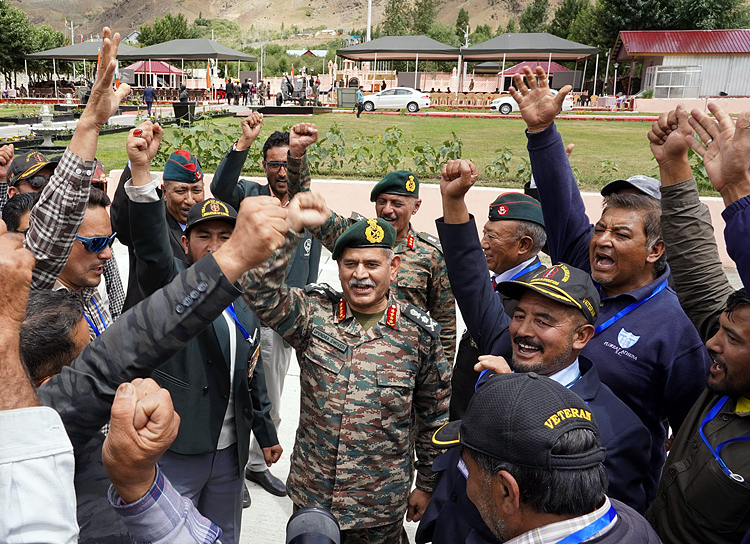
SP's Land Forces (SP's): 'Operations Sindoor' was a defining moment for the Indian Armed Forces. What were the lessons drawn from this short conflict on the role of joint, multi domain operations and use of precision weapons?
Chief of the Army Staff (COAS): Operation Sindoor showcased the Indian Armed Forces' ability to deliver swift, precise and coherent military response within a compressed timeframe. The conflict validated the strength of integrated planning, real-time intelligence fusion and decisive leadership at the national level. It also reaffirmed that conflicts may be short, intense and technology driven, demanding rapid mobilisation, seamless logistics and accelerated decision cycles.
“Above all, Operation Sindoor highlighted the decisive advantage created by joint and multi-domain operations, where air, land, cyber, electronic and cognitive warfare capabilities worked in harmony.”
The operation highlighted the centrality of synergy, precision and rapid decision-making. Even while executing focused operations, the Army ensured a stable and deterrent posture on all other fronts. Key takeaways include the proven performance of drones and loitering munitions, which strengthened confidence in indigenous solutions while underscoring the need to accelerate self-reliance. The experience reinforced the necessity for greater investment in research and development. It also emphasised that electronic warfare and counter-drone measures must evolve simultaneously.
The operation demonstrated that the integration of unmanned platforms into training, SOPs and battlefield architecture will be crucial for future conflicts. Above all, Operation Sindoor highlighted the decisive advantage created by joint and multi-domain operations, where air, land, cyber, electronic and cognitive warfare capabilities worked in harmony. Precision weapons further amplified this synergy, enabling high-impact outcomes with minimal collateral damage.
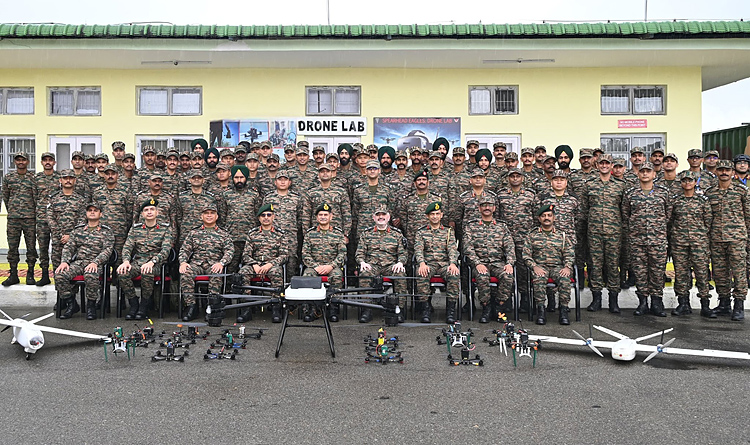
SP's Land Forces (SP's): Operation Sindoor reinforced the requirement to achieve better jointness and tri-service integration? What is the road map and milestones for achieving this objective?
Chief of the Army Staff (COAS): True. Operation Sindoor reaffirmed that India's future warfighting strength lies in deeper jointness and seamless tri-service integration. The Indian Army is fully committed to this transformation and is progressing along a clear and irreversible roadmap.
As regards road map and milestones are concerned, we are approaching Theatre Commands as joint warfighting structures, not as a single service initiative. Core planning groups, studies and working panels are examining command and control models, areas of responsibility, logistics, communications and human resource policies. Within the Army, internal structures are being aligned to future Theatre Commands through rationalisation of formations and integration of operational, logistics and communications architectures, ensuring that Army formations can transition smoothly when theatres are formalised.
“The future of Indian warfare is joint, integrated and theatre focused.”
Doctrine, training and HR systems have already shifted to a joint-first orientation. Institutions such as the Army War College and DSSC have revised syllabi to emphasise joint planning, multi-domain operations and integrated logistics. Higher-rank appointments are increasingly viewed as joint warfighting billets to prepare leaders for future Theatre responsibilities.
We remain sanguine that this transformation will significantly enhance the warfighting capability of the Indian Armed Forces. The direction is clear and firmly set. The future of Indian warfare is joint, integrated and theatre focused. The Indian Army is fully committed and deeply involved in shaping this transition, ensuring it strengthens operational readiness while making the forces more agile, more lethal and better prepared to safeguard national interests in the coming decades.
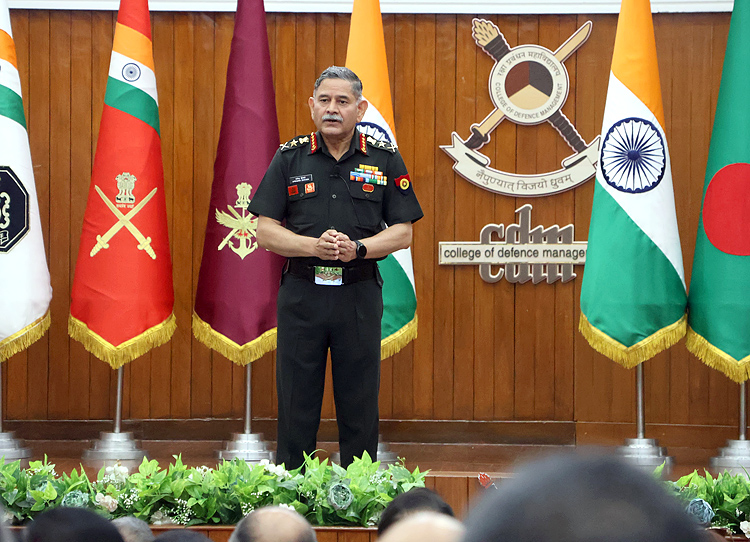
SP's Land Forces (SP's): What have been the learning points for the Indian Army from recent global conflicts, especially the Russia-Ukraine war and what are doctrinal and operational changes that have been made based on these learning?
Chief of the Army Staff (COAS): Recent global conflicts, particularly the Russia–Ukraine war and the ongoing Middle East hostilities, have been analysed closely by the Indian Army. While they have not changed our doctrinal foundations, they have significantly sharpened our focus on the realities of modern warfare and validated several assumptions that underpin our preparedness.
A key lesson from Ukraine is the transition from an equipment-centric model to a systems-of-systems approach where sensors, shooters and protection measures function as one integrated capability. Precision, persistence and protection now define battlefield effectiveness. The land continues to maintain the currency of victory, which has further been complicated by the enhanced density of drones, electronic warfare, loitering munitions, electronic warfare, robust air defence and modern communication technologies. They also reinforce the importance of signature management, dispersion and redundancy for survivability. The side that adapts technology fastest gains an operational edge, underscoring the need for close partnership between the military, industry, start-ups and DRDO. Lessons in logistics have been equally important-Ukraine shows that sustainment, repair and depth battles can shape the outcome as much as frontline engagements. Self-reliance in defence technology and production is essential for endurance in prolonged military operations. Conflicts in Ukraine and Gaza also reaffirm that information warfare moves in parallel with kinetic warfare. Perceptions, videos and narratives travel faster than missiles and require a calibrated national response.
“Our doctrinal shift also reinforces that modern war is multi-domain from the outset, not sequential.”
These lessons have contributed significantly in our doctrinal reappraisal. Our doctrine now emphasises on non-contact warfare, long-range precision fires, counter-UAS systems, loitering munitions and integrated air defence. Tactical doctrines and training manuals are being updated to incorporate high-density drone environments and electronic warfare. Our doctrinal shift also reinforces that modern war is multi-domain from the outset, not sequential. Hence, joint planning, integrated targeting and common operating pictures are now central features.
In summary, the Indian Army is distilling deep lessons from every conflict. These insights are shaping our doctrine, structures and training to create a modern, agile and future-ready force that is technologically empowered, jointly integrated and prepared for the evolving character of warfare.
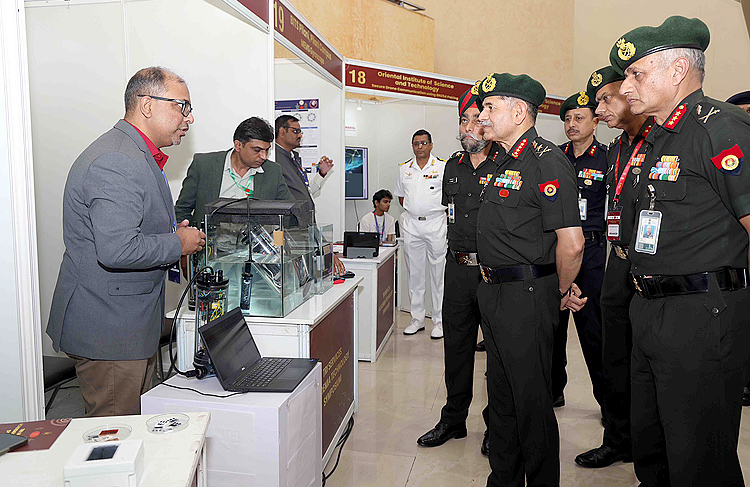
SP's Land Forces (SP's): The use of Drones and Unmanned Systems has been game changers in war fighting. What role does the Indian Army see for these systems and what are the plans for their induction? How does the Army plan on leveraging them for operational purposes?
Chief of the Army Staff (COAS): The Indian Army views Unmanned Aerial Systems as a critical component of future battlefields and is progressing their induction across a wide range of roles, capabilities and ranges based on the operational needs of all arms and services. UAS are being prioritised not only in combat arms but also in specialist arms to significantly enhance aerial surveillance, targeting and operational awareness.
The Army has taken deliberate steps to build a futuristic capability in UAS warfare by inducting advanced technologies and evolving operational philosophies to ensure true complementarity in the employment of manned and unmanned systems. As part of ongoing organisational reforms, new structures including Ashni Platoons, Divyastra Batteries, Shaktibaan Regiments and Bhairav Battalions are being developed as major users of the Air Littoral domain. These formations are being integrated into existing combat forces and are presently undergoing extensive validation.
“The Indian Army views Unmanned Aerial Systems as a critical component of future battlefields and is progressing their induction across a wide range of roles, capabilities and ranges based on the operational needs of all arms and services.”
The process includes simulated exercises aimed at validating organisation, equipment profiles and employment concepts. Focused procurement, restructuring and specialised training are underway to build the required equipment capability and operational proficiency. These initiatives aim to create agile, technologically empowered and operationally efficient structures capable of meeting challenges on both fronts and ensuring the Army remains prepared for future conflicts.
SP's Land Forces (SP's): Indigenisation is the Key but it seems that our pace of developing and inducting indigenous weapons lags behind the Army's requirement of such systems! What do you think can be done to make sure that the Army is equipped with the latest and best quality weapon systems as and when required?
Chief of the Army Staff (COAS): Ensuring that the Indian Army remains equipped with the latest and most reliable weapon systems requires a balanced approach ie; meeting immediate operational requirements while pursuing long-term goals of technology sovereignty and strategic autonomy. A nuanced model of self-reliance is essential, combining selective imports, technology transfer and joint ventures with a strong push for indigenous modernisation.
“A nuanced model of self-reliance is essential, combining selective imports, technology transfer and joint ventures with a strong push for indigenous modernisation.”
Operational continuity is strengthened by diversifying sources through a calibrated mix of imported and indigenous systems, ensuring availability even during geopolitical tensions or supply-chain disruptions. Dual sourcing, licensed production and offset partnerships further reduce overdependence, maintain access to spares and upgrades and channel foreign investment into Indian R&D and manufacturing.
Simultaneously, integrating indigenous upgrades into imported platforms improves system performance while reducing long-term dependency. Government initiatives such as the Technology Development Fund and iDEX continue to energise the innovation ecosystem by encouraging private industry and start-ups to develop niche military technologies. Together, these steps ensure that the Army remains operationally prepared in the present while steadily advancing towards deeper indigenisation in the future.