



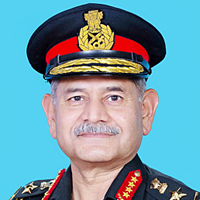
The insightful articles, inspiring narrations and analytical perspectives presented by the Editorial Team, establish an alluring connect with the reader. My compliments and best wishes to SP Guide Publications.
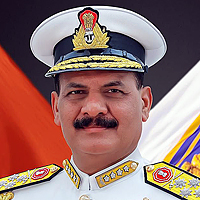
"Over the past 60 years, the growth of SP Guide Publications has mirrored the rising stature of Indian Navy. Its well-researched and informative magazines on Defence and Aerospace sector have served to shape an educated opinion of our military personnel, policy makers and the public alike. I wish SP's Publication team continued success, fair winds and following seas in all future endeavour!"

Since, its inception in 1964, SP Guide Publications has consistently demonstrated commitment to high-quality journalism in the aerospace and defence sectors, earning a well-deserved reputation as Asia's largest media house in this domain. I wish SP Guide Publications continued success in its pursuit of excellence.
On the occasion of ‘The Army Day’, in an exclusive interview with SP’s Land Forces, the Chief of the Army Staff said the Indian Army’s modernisation drive is firmly aligned with the changing character of warfare, which he noted is increasingly multi-domain, technology intensive and fast paced. He explained that under the Decade of Transformation (2023–2032), the Army is following a comprehensive Whole-of-the-Nation approach built around five pillars: jointness and integration, force structuring, modernisation and technology infusion, reforms in systems and processes, and human resource management.
The Army Chief said modernisation is no longer limited to acquiring new platforms, but is focused on absorbing and integrating advanced technologies into operational structures. He noted that 2024–25 were designated as the Years of Technology Absorption to accelerate the induction of niche and emerging technologies, accompanied by organisational restructuring and the raising of new capabilities. He added that force structuring initiatives such as Integrated Battle Groups, specialised drone units and precision strike formations are strengthening surveillance, precision and multi-domain operational readiness, while jointness is being extended beyond the three Services to include civil authorities, security forces and local communities.
Reflecting on Operation Sindoor, the Army Chief said the short conflict validated the effectiveness of joint planning, real-time intelligence fusion and precision weapons. He observed that the operation demonstrated the decisive advantage of multidomain synergy, the growing role of drones and loitering munitions, and the need to evolve electronic warfare and counter-drone capabilities in parallel. On tri-service integration, he said Operation Sindoor reinforced the necessity of Theatre Commands as joint warfighting structures. He explained that doctrine, training and leadership development are already being reoriented towards a joint-first approach to enable a smooth transition.
Drawing lessons from global conflicts such as the Russia–Ukraine war, the Army Chief said the Army has sharpened its doctrinal focus on systems-of-systems warfare, non-contact operations, high-density drone environments and information warfare. He concluded by saying that indigenisation remains a strategic priority, pursued through a balanced model that combines indigenous development with selective imports, technology transfer and industry partnerships to ensure both immediate readiness and long-term self-reliance.
Other stories in this issue provide an overview on how India continues to strengthen its national defence capabilities through a combination of advanced force modernisation, strategic border security initiatives and large-scale infrastructure development. The induction of the Boeing AH-64E Apache attack helicopter into the Army’s 451 Army Aviation Squadron has significantly enhanced offensive air combat capability, while the establishment of three new military garrisons along the Indo-Bangladesh frontier has fortified the strategically vital Siliguri Corridor, improving surveillance and rapid response along the eastern border. Complementing these operational upgrades, the dedication of 125 border infrastructure projects—including 28 roads, 93 bridges and four other key works across two Union Territories and seven states—marks a major boost to connectivity and military mobility, representing the largest single set of high-value inaugurations undertaken by the Border Roads Organisation.
Wishing all discerning readers happy reading!