




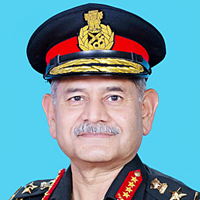
The insightful articles, inspiring narrations and analytical perspectives presented by the Editorial Team, establish an alluring connect with the reader. My compliments and best wishes to SP Guide Publications.
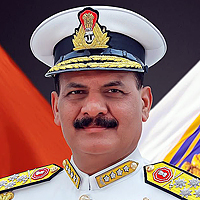
"Over the past 60 years, the growth of SP Guide Publications has mirrored the rising stature of Indian Navy. Its well-researched and informative magazines on Defence and Aerospace sector have served to shape an educated opinion of our military personnel, policy makers and the public alike. I wish SP's Publication team continued success, fair winds and following seas in all future endeavour!"

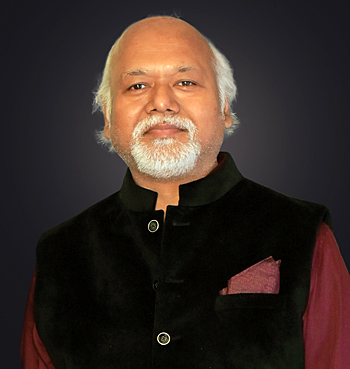
Since, its inception in 1964, SP Guide Publications has consistently demonstrated commitment to high-quality journalism in the aerospace and defence sectors, earning a well-deserved reputation as Asia's largest media house in this domain. I wish SP Guide Publications continued success in its pursuit of excellence.
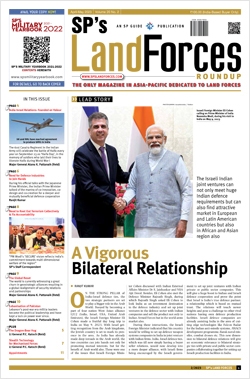
Our lead story examines geopolitical developments in Asia. Major General Atanu Pattanaik (Retd) argues that the first US-China-Russia summit, held in Shenzhen on the sidelines of APEC on November 19, 2026, was more about optics than outcomes, reflecting fading American hegemony. He contends that Trump’s ‘Yalta 2.0’ framing is misplaced: Yalta united allies against a common enemy, whereas Shenzhen brought adversaries together. Ukraine, Iran and Taiwan were absent from the joint statement, which set no timetable for nuclear arms limitations. The summit unfolded amid the Ukraine war, US-Israel strikes on Iran since February 2026, the closure of the Strait of Hormuz and a hunger crisis. Chinese President Xi emerged as its beneficiary, Putin gained validation, and Europe was sidelined. India was absent from APEC, while the 55-minute QUAD leaders’ meeting in Manila proved inconclusive, with little outcome.
Lt General P.C. Katoch (Retd) examines the Indian Army’s Land Warfare Doctrine 2026, released on October 23 and unveiled on October 30 at the Army Commanders’ Conference. It marks the major revision since December 2018. Drawing lessons from the 2020 Galwan crisis and Operation Sindoor, the doctrine envisages reliance on AI, drones, multi-domain operations, manned-unmanned teaming and hardened communications. Drone and counter-drone proficiency is made mandatory across ranks. However, analysts identify shortcomings: an Army-centric approach without theatre commands; excessive technological dependence in high-altitude conditions; no clear plan for allocating resources on multiple fronts; a gap between self-reliance ambitions and India’s semiconductor and sensor capabilities; and organisational inertia. The author highlights the absence of a National Security Strategy and India’s dependence on foreign computing and space infrastructure, warning that these gaps could leave the doctrine largely aspirational.
This issue examines developments in the Indian Army’s Future Infantry Combat Vehicle (FICV) and Future Ready Combat Vehicle (FRCV) programmes. The search for a BMP-2 replacement began with a 2021 request for around 1,750 indigenous tracked, amphibious infantry combat vehicles, followed by approval in principle in December 2022. DRDO unveiled tracked and wheeled Vikram VT 21 platforms in April 2026. Tata’s WhAP 8x8 is in service in some variants and has been exported to Morocco. India-US discussions on the Stryker continue, while 693 BMP-2s are being upgraded temporarily. The FICV programme now requires a baseline, a predictable order, and decisive execution rather than deliberation.
The FRCV is intended to replace the Army’s T-72 fleet, with a requirement for 1,770 tanks in three batches of 590. AVNL and BEML have sought technology partners, attracting interest from L&T, Tata and Mahindra. The tank is envisaged at 55 tonnes, with a four-member crew, a 1,500 hp engine, a 120mm gun, missile-firing capability and an active protection system. Yet an indigenous hull alone will not ensure technological sovereignty if critical systems, including power packs and sensors, remain imported. The programme will depend on stable operational requirements, indigenous development of technologies and a development and acquisition schedule.
Wishing all discerning readers happy reading!